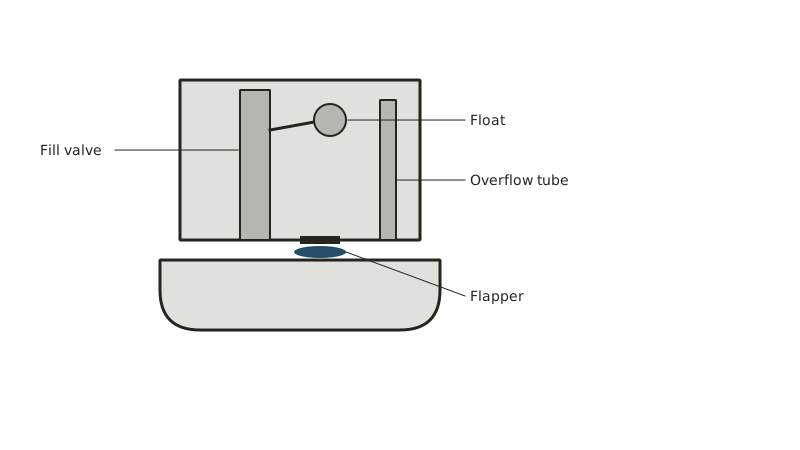
Slide the porcelain lid aside and just watch the water for sixty seconds. What the water is doing tells you the part to blame. Water spilling into the standpipe in the middle means the fill is set too high. Water slipping unseen under the rubber disc at the bottom means the seal has failed. Both are small parts, and the wider fixture is covered on the toilet repair overview.
Which of the two leaks do I have?
Tint the tank water, hold off on flushing, and look at the bowl ten minutes later. Tinted bowl water points at the rubber seal on the tank floor. A clear bowl alongside a tank level that touches the standpipe rim points at an overshooting refill.
EPA WaterSense describes this same dye check and adds a flush at the end, which keeps the tank from staining. Its advice for the rubber flapper is a new one at least once every five years.
Listening helps as well. A quiet continuous hiss while the bowl looks ordinary suggests seepage under the flapper, whereas splashing near the tank's top edge, with ripples circling the standpipe, suggests too much inflow.
| What you notice | Likely culprit |
|---|---|
| A hiss that repeats every few minutes | Worn or warped flapper |
| Water trickling into the standpipe | Float riding too high, or a tired fill valve |
| Handle stays down, water never stops | Chain snagged or too tight |
| Tank refills very slowly, then runs on | Debris in the fill valve |
| Wet floor beside the toilet | Supply line, tank bolts or wax seal |
What keeps the water going once the flush is over?
Usually the flapper, the rubber stopper that rises during the flush and settles back over the drain opening. When it hardens, curls at an edge, gets coated with minerals or is propped up by the chain, the tank bleeds down into the bowl, and the refill mechanism spends all day making up the difference.
According to EPA, worn flappers account for most toilet leaks, and they cost little and swap out fast. Turn the wall valve off, flush, and drag a fingertip around the rim of the seat. Wipe off any slime or grit; a flapper that refuses to lie flat needs replacing.
Check the chain, too. A little slack, around a half inch, is right. A taut chain pulls the flapper ajar, and one that is too long can loop beneath the stopper and keep it from dropping.
Flapper replacement is walked through on the page about swapping a toilet flapper, and a handle that moves but does nothing is explained under a loose toilet handle.
Why will the tank not stop filling?
Something is stopping the fill valve from closing. Its job is to close once a float has climbed to a preset height. A float adjusted too high, a bent arm, grit lodged under the valve seal or a worn body can each leave the water flowing, and the excess runs into the standpipe and down into the bowl.
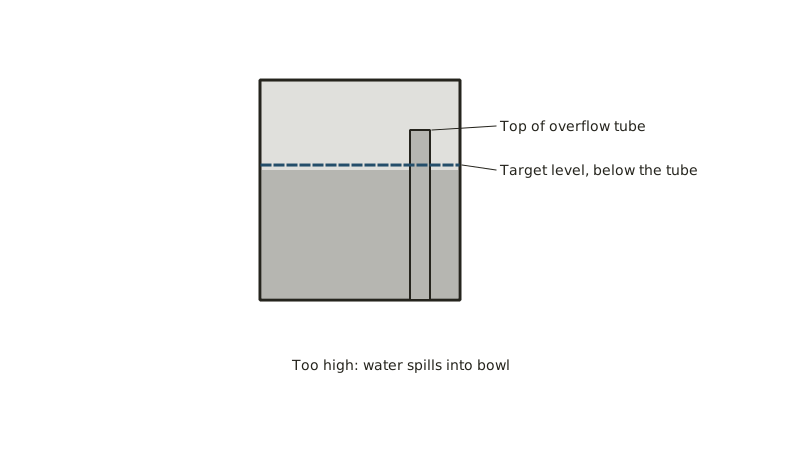
Almost every valve carries a small adjuster, a screw or a sliding clip. Target a waterline about an inch beneath the standpipe rim, or at the mark molded into the tank wall. If turning the adjuster changes nothing, the valve has probably failed, and a new one is a common repair that the guide to replacing a fill valve describes.
A cracked standpipe, or an aging flush valve seat that leaks even under a fresh flapper, produces the same symptom. Those cases are covered in fixing the overflow tube.
In what order should I try the fixes?
Go from free to paid. First free the chain, then wipe the seat, then lower the float, and only after that buy a flapper, and finally a fill valve. Retest with the coloring after each change. Most running toilets give up after one or two of these steps, and each pass takes perhaps a half hour.
- Turn the wall stop valve off and drain the tank with one flush.
- Check chain play and the flapper's shape.
- Wipe the seat and the flapper edge with a damp rag, avoiding solvents that attack rubber.
- Reopen the valve and compare the waterline with the standpipe.
- Lower the float if the level is high.
- Run the coloring test again.
- Still tinted? Fit a new flapper that matches your flush valve, since styles and sizes vary.
Water chemistry can speed up wear. Long Beach Utilities' 2025 report lists hardness near 12.8 grains per gallon on average where imported water is delivered, versus roughly 4.4 in the blended zone. Mineral scale builds on flapper seats, so a house in a harder-water area may need these parts sooner.
What if water is also coming out around the base?
A puddle at the base is a different failure. The usual suspects are a tired wax seal under the bowl, loose closet bolts, a hairline crack, a worn supply connection, or tank bolts whose washers have hardened. Dry everything, nip up the bolts gradually, and see which spot is wet again.
Dampness plus a faint sewer odor usually means the wax seal. Pulling the bowl and setting it again is within many owners' reach, so long as the floor underneath is sound. Soft or darkened flooring near the flange calls for a stop, because rot may have spread beneath the tile or vinyl. See toilet leak causes and the page on weak flushes for related faults.
If the toilet is aging and keeps failing, replacing it is reasonable. EPA notes that older models can draw up to 6 gallons per flush, where WaterSense models use 1.28 or less. Long Beach issues a plumbing permit for a low-consumption toilet to either the homeowner or a plumbing contractor, and one is required. Long Beach Utilities offers rebates to some customers, so ring (562) 570-2300 before you buy.
What does a running toilet do to the water bill?
It can quietly add to it. In the average household, EPA reports leaks wasting more than 9,300 gallons a year, and roughly one home in eleven loses 50 gallons or more daily. Long Beach Utilities lists toilets among the usual causes of a surprising bill and suggests a meter test: every tap off, take a reading, then look again after two hours.
One limit matters: the city's leak adjustment program covers hidden or underground leaks only, and it does not cover toilet or faucet leaks. Repair costs come out of your pocket, so there is a case for fixing it early.
When the bill stays high after a repair, other reasons the water bill climbed are worth ruling out, and plumber pricing helps with budgeting. A written price for a visit is available through the quote form.
Common questions
Why does the tank fill though nobody touched the handle?
Water is seeping out of the tank, typically beneath a worn flapper, and the valve wakes up to replace what drained. Coloring in the tank confirms it. If the bowl tints without a flush, clean the seat and fit a new flapper.
Is the waste from a leaky one significant?
Federal figures put yearly household leak loss above 9,300 gallons, and toilets feature often in that total. A silent flapper leak can run around the clock without any noise. The usual remedy is one inexpensive part and roughly thirty minutes of work.
Is the supply valve needed for these repairs?
Float and chain adjustments are fine with the water on. Before swapping a flapper or fill valve, rotate the small oval-handled valve at the wall clockwise, flush the tank dry, and start work on dry parts. That keeps water off the floor.
When does hiring someone make more sense?
Book one when the toilet runs on despite a fresh flapper and fill valve, when moisture appears around the base, when porcelain is cracked, or the stop valve is stuck open. A plumber can also check household pressure and replace the whole flush assembly.
This guide is one of many on plumber in Long Beach.
References
- U.S. EPA WaterSense, Fix a Leak Week (toilet dye test, flapper age, household leak volume)
- U.S. EPA WaterSense, residential toilets
- Long Beach Utilities, high water bills and leak checks
- Long Beach Utilities, water rebates and incentives
- Long Beach Utilities, 2025 Annual Water Quality Report
- City of Long Beach, permit questions
Updated