Smell first, spreadsheet second. Rotten-egg odor, a hissing joint, a meter dial racing with every appliance off: each one is a reason to go outdoors and call the utility from there. In Long Beach and Signal Hill the gas utility is the city's Long Beach Energy Resources, at (562) 570-2140. Lakewood, San Pedro, Seal Beach and other neighbors are served by SoCalGas, at 1-800-427-2200. Nobody should touch a light switch or a lighter on the way. Dial 911 for injuries or fire. Everything below concerns money, and the gas line overview covers the work itself. A price tied to your house comes after a visit, which Harbor Lights Plumbing can set up.
What is the per-foot price of new gas piping?
The 2026 national guides cluster at $15 up to $25 per running foot of pipe, and a Los Angeles guide says $17 up to $28. Permit and inspection fees tend to add around $300. A short hop to a range or dryer can finish under $1,000, whereas a long run out to a pool heater or outdoor kitchen costs a multiple of that.
Published California totals disagree: one survey averages about $956 statewide, another lists $865 to $2,318. Routes decide most of it. Pipe across a finished wall, a driveway or a slab takes more labor to open and patch than the steel itself costs. Sales tax on materials is on top.
Thinking about a patio appliance? Have the estimate split footage from fittings, so two bidders can be compared line for line.
Which pipe and flexible connector will go in, and does that move the price?
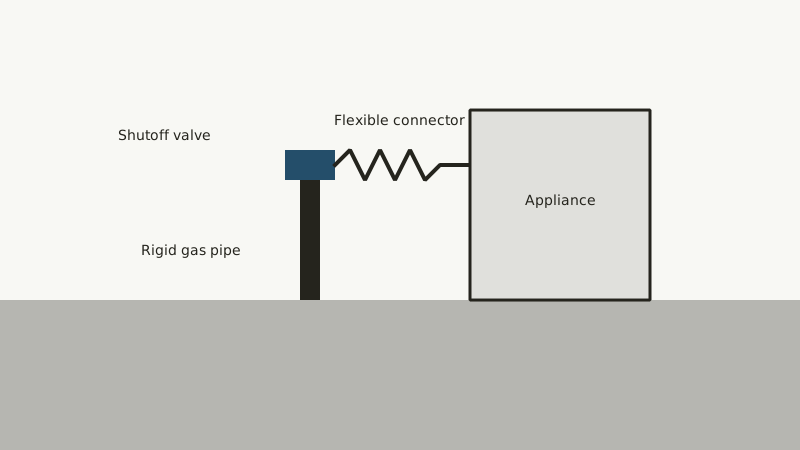
Inside a house, natural gas usually travels through black steel pipe or corrugated stainless tubing, and a short flexible connector ties each appliance to its valve. Material is the smaller expense, published at about $1 to $10 per foot, so labor, access and pressure testing set the total.
What is permitted depends on the adopted code and the gas utility, so the plumber names the product. The City of Long Beach says gas pipe cannot be installed in or on the ground beneath a building, and buried steel must arrive with an approved factory coating. In slab houses that limits where a new line can go.
Appliance connectors age and should not be reused after a stove is slid around. The part is inexpensive, but fitting it still belongs to a gas-capable tradesperson, because a loose joint leaks.
How much will a gas line repair run?
The spread is huge because the faults are. Capping an abandoned stub is listed near $75 to $150, a system inspection near $150, and one national guide shows $120 up to $5,000 for a leak, while another narrows it to $245 through $1,481. Wall, soil or landscaping restoration can add hundreds or thousands more.
Where the line is located matters most. A weeping fitting beside a water heater is a quick visit. A pinhole inside an enclosed wall or in buried steel must be traced first, and the city's page says defective pipe or fittings get replaced instead of patched. Tape and putty are never an acceptable fix on gas.
What hourly rate applies to gas work?
Los Angeles guides show $50 to $200 for ordinary plumbers and about $80 to $225 for gas specialists, while national figures for gas installation and repair sit nearer $45 to $150. One California survey averages roughly $97 for residential contractors. Trip fees and parts come separately.
You will see "gas safe plumber" in search results, but that credential is British. In California, what counts is a contractor license covering plumbing, a point worth confirming with the state before you accept terms. Ask for the license number in writing before the visit.
What about fixing an ordinary water pipe? Pricing there turns on material and reach. A visible compression fitting beneath a vanity is a brief, modest call, and a leak inside a slab is a by-the-job quote. The overall pricing page explains hourly billing.
Why do earthquake shutoff valve quotes differ?
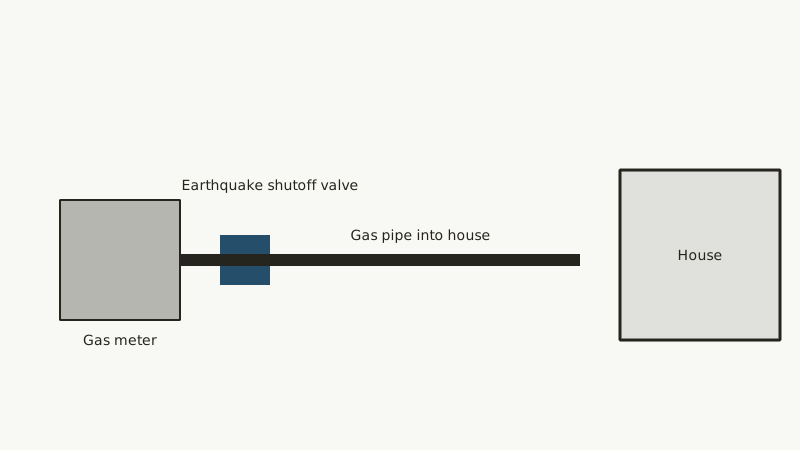
Installers around Southern California quote $300 to $800 for a standard seismic valve on an ordinary meter, permit included, and $450 to $800 for a unit that also has excess-flow protection. Orange County pricing reaches $1,200 for combination setups. The hardware alone commonly costs $100 to $200.
Send the plumber pictures of the meter for a firm price, and ask your insurer whether it discounts homes with the valve. Details on operation and the main shutoff are in our earthquake valve guide.
Which Long Beach rules sit behind a gas pipe quote?
State law ties plumbing and gas piping to a contractor license, and the city asks for a plumbing permit ahead of installation, alteration or repair, with short exemptions. When the pipe is in, an air test follows: the city page calls for 10 psi that holds a quarter of an hour, plus soapy water to trace bubbles.
An owner-occupant of a one- or two-family house can apply for a permit on personal work under the city's conditions. For gas, we would steer you toward a contractor, who also needs a Long Beach business license. Residential gas piping codes go deeper.
Address matters for the utility. Long Beach and Signal Hill get gas from the city's Long Beach Energy Resources, which also reaches parts of a few neighboring cities. SoCalGas serves other nearby communities, including Lakewood, San Pedro and Seal Beach. Your bill shows which one is yours.
Common questions
How many hours should a small extension take?
Reaching one appliance can wrap up in a few hours, pressure test included. Longer runs, trenching or opening finished walls stretch to a day or beyond, and the permit and inspection add calendar time. The estimate should list the steps and say who books the inspector.
What belongs in a written gas line estimate?
The contractor's license number, the permit plan, the pipe type, whether testing and patching are included, and how hidden damage will be handled. Ask for footage and fittings priced separately. Collect two estimates with the same scope, and keep everything on paper before work starts.
Must somebody stay home during the work?
Normally yes: someone opens the house, points out the meter and shutoff and is present when gas returns and appliances are relit. Certain jobs require the utility to restore service. Raise it with the plumber early, including who phones the utility and whether a return trip follows.
What separates a gas connector from the gas line?
Picture the line as the rigid pipe running inside a partition or beneath the floorboards. The connector is the short flexible piece between a stove or dryer and its shutoff. Connectors cost less and age faster, so they are normally replaced whenever the appliance is, and the joint gets leak-tested afterward.
References
- City of Long Beach, plumbing permit and gas piping requirements
- SoCalGas, natural gas leaks
- Long Beach Utilities, gas service and emergency line
- Long Beach Utilities, gas service
- California Contractors State License Board, hiring a contractor
- Published gas line installation and repair cost guides for Los Angeles and California, checked November 2026
- Published earthquake gas shutoff valve prices from Southern California installers, checked November 2026
Updated