What is backflow prevention testing, and why is it required?
A backflow test is a brief on-site check by a qualified tester, confirming the assembly still blocks reverse flow into the public water supply. Suppliers insist on it because a failed device can pull irrigation runoff, chemicals or fire-line water back into drinking water. Plan on a test every year. Related code work, such as gas, is covered under permits, codes and inspections.
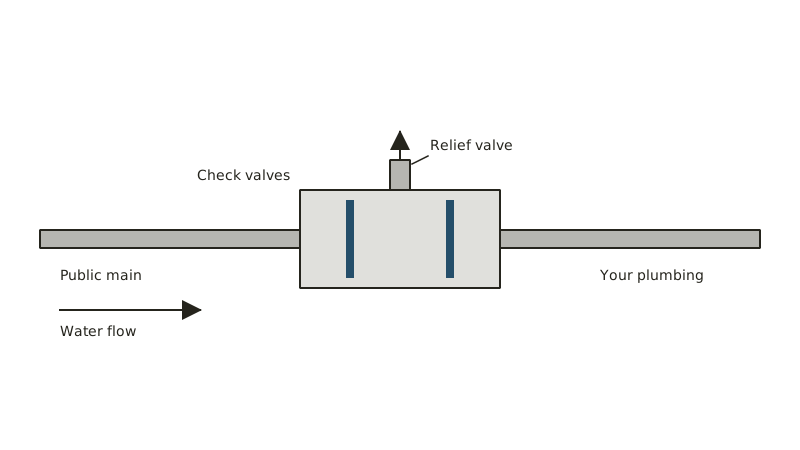
A backflow assembly sits where your private plumbing could contaminate the public line. Water normally flows one way, from the main to you. If pressure drops, say after a main break or heavy firefighting demand, the flow can reverse, and an assembly is the barrier. Under state policy it is the water supplier's duty to see that assemblies in its program get field-tested at least yearly, and the supplier tells customers how.
Who has to test a backflow device in Long Beach?
Commercial, industrial, fire line and multifamily irrigation assemblies are generally tested every year, and many houses with an irrigation system or a lawn sprinkler have a device too. Long Beach Utilities sends a notice when yours is due. Ask the supplier for the current rules, because a home on another supplier follows that supplier's list.
Long Beach is served by its own utility. Water in San Pedro and Wilmington comes from LADWP instead, and other nearby cities have their own suppliers. Each sets its own forms, deadlines and approved-tester list. Long Beach Utilities' rules call for a tester approved by Los Angeles County or trained to the AWWA standard, so confirm with Long Beach Utilities at (562) 570-2300 before hiring anyone.
New devices also need a plan check and a test at installation. Long Beach Utilities lists a Backflow Preventer Plan Check under its development services pages, so a new commercial or irrigation connection should start there.
How does a backflow assembly test work?
The tester shuts the valves on both sides, connects a gauge to the assembly's test cocks and reads whether each check and the relief valve hold the right pressure. A passing result goes to the supplier as a report. A failing device is repaired and tested again. The measurement is brief, frequently under half an hour.
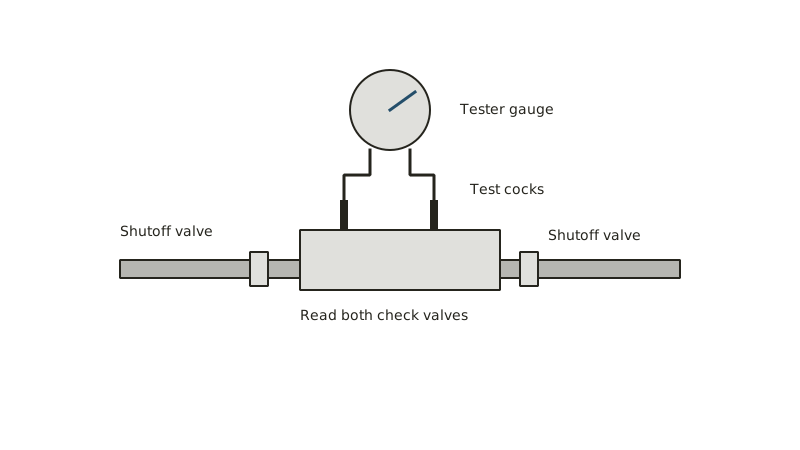
You will lose water for a few minutes while the tester works. The tester needs access to the device, and covered or buried assemblies slow the visit. Clear the area around it, trim back shrubs and unlock any gate or cage beforehand.
Common assembly types you will hear named:
- Reduced pressure principle assembly (RPZ): used on higher hazard connections. It sits above ground, often with a relief port that may spit water when it works.
- Double check valve assembly (DCVA): used on lower hazard lines such as many fire services.
- Pressure vacuum breaker (PVB): a frequent choice for lawn sprinklers, mounted higher than every sprinkler head.
- Atmospheric vacuum breaker: a simpler device that is not tested the same way.
The paperwork matters as much as the test. The tester files results with the supplier, and an overdue or missing report is what triggers a reminder, late notice or shutoff.
How much does backflow testing cost?
Price guides show roughly $75 to $150 for a residential test per device, in a wider spread of $65 to $250. Reduced pressure units tend to run $100 to $200, and big or awkward installs cost more. Repairs, retests and filing fees come on top.
| Item | Guide range |
|---|---|
| Residential test, pressure vacuum breaker | $75-$125 |
| Residential test, double check assembly | $75-$150 |
| Residential test, reduced pressure assembly | $100-$200 |
| Commercial per device | $125-$400 |
| Repair parts and retest | extra, quoted after the test |
None of this is a Long Beach rate card; it comes from national and regional guides. Some water departments charge a small fee to file a report. Ask the tester what the price covers: the test, the paperwork and one retest after a repair.
For the commercial side, see our guide to commercial backflow testing and how an irrigation device is handled in backflow testing for a sprinkler system.
What happens if a backflow preventer fails the test?
The device is repaired or replaced, then retested, and the passing result is filed with the water supplier. Usual fixes are fresh rubber seals, springs or check parts, work that a tester or plumber may complete during the same visit. If the assembly is old, corroded or the wrong type, replacement may cost far more than a repair.
Failures follow the same pattern. Debris lodges on a seat. A pressure vacuum breaker sits too low and gets sprinkler water. Freezing is rare in Long Beach, but salt air and sun wear out outdoor brass and rubber. If the tester says the device is damaged beyond repair, get a written quote and ask what permit or plan check the supplier wants before a new one goes in.
Do not ignore a failed test. The supplier can issue notices and, in serious cases, shut off water to a connection that protects the public supply. Fixing it quickly is cheaper.
How do you book backflow testing, and what should you have ready?
Keep the supplier notice handy, along with the device location and, if the tag is readable, its make and model. Clear access, and tell the tester about any gate or dog. Book with a qualified tester recognized by the water supplier. For a plumber arranged through us, use the quote form and describe the device, the address and the deadline.
Ask whether the same person can test and repair in one trip. If you own a building with tenants, tell them about the shutoff. The plumber inspection cost page shows how other inspection visits are priced.
Mobile home parks and older properties sometimes have shared or buried assemblies, and a park owner may handle testing for all units. If a park manages the plumbing, ask them. The wider checks for those properties are in mobile home plumbing inspections. Back on the Harbor Lights home page you can see how the service works.
Common questions
How often does backflow prevention need testing?
Once a year for assemblies in a supplier's program, and again whenever one is installed, fixed or moved. The supplier mails a notice with a deadline, and the fixed date matters. Suppliers can set shorter intervals or extra rules, so the letter you receive outranks any general guide.
Am I allowed to test my own backflow preventer?
Generally no. Suppliers expect testing by a tester whose credentials they recognize, using a calibrated gauge, and they accept reports only from approved testers. You can check that the device is accessible and free of debris, but the official test is a professional job.
What does backflow preventer testing cost for a home?
Published guides suggest $75 to $150 for a home assembly that passes cleanly. Reduced pressure assemblies cost more, and repairs and retests are extra, so ask what the first price actually covers. Also ask if the price covers sending the report to the water supplier.
How long is the tester on site?
Often under half an hour per device, with water off for a few minutes. The visit stretches if the device is buried, covered, corroded or awkward to reach, or if repairs and a retest follow. Ask for a time window when you book.
Does a plain single-family house need one?
Houses with lawn irrigation, a fire sprinkler line or another cross-connection hazard can need one, while a basic home with no such connection often does not. Ask Long Beach Utilities, or whichever supplier serves you, which assemblies are recorded against your account.
References
- Long Beach Utilities, backflow preventer plan check (Development Services, Water)
- Long Beach Utilities, water system and contact details
- Published residential backflow test prices from testers and national guides, checked November 2026
Updated