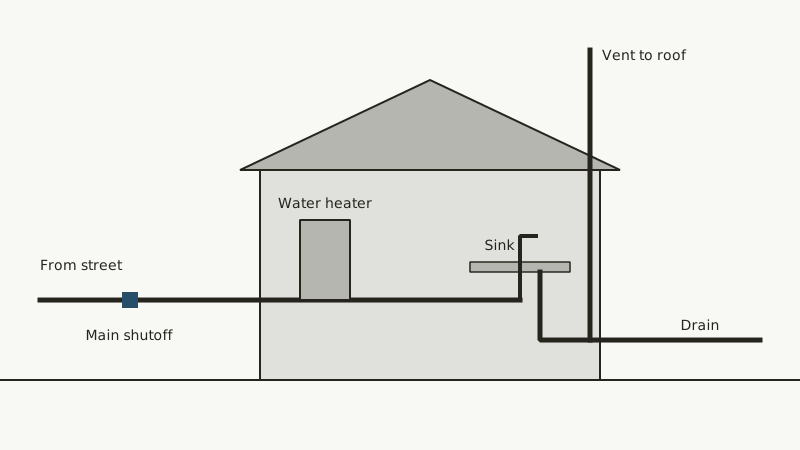
Water and gas problems seldom pick a tidy moment. Through Harbor Lights Plumbing, a tradesperson from the area visits your house in Long Beach, San Pedro, Wilmington, Signal Hill, Lakewood or Seal Beach, inspects the fault and hands you a figure in writing before any tool comes out. Browse the Harbor Lights Plumbing home page for everything we handle, or stay here for how a visit works, the usual charges and a checklist for sizing up any plumbing outfit. Per-job numbers sit on the pricing overview.
Which jobs fit a standard plumbing visit?
Nearly anything that moves water or gas through a house fits: dripping fixtures, stubborn clogs, dead water heaters, weak pressure, split or corroded lines, disposals and the little stop valves beneath sinks. The tradesperson finds the cause on site, explains it without jargon, then quotes either a repair during that visit or a second appointment for parts.
Typical requests sort into six piles:
- Leaks, from a weeping trap beneath the kitchen sink to a brown stain spreading across a ceiling. Interim steps are on the leak page.
- Clogs, such as a stubborn toilet, or a tub draining like cold honey.
- Hot water, covered in more depth under water heater repair.
- Pressure trouble, traced to a worn regulator, a clogged aerator or tired galvanized steel.
- Gas piping, which follows separate rules explained below.
- New fixtures: faucets, toilets, disposals.
Housing near the harbor leans old, with plenty of bungalows dating to the 1920s through the 1950s. Opening one of those walls frequently reveals galvanized steel mixed with later copper, patched by several owners. Lakewood tract homes from the postwar boom were piped differently, so the visiting plumber identifies the material before suggesting a fix.
How do repair, installation, inspection and ADU work differ?
Repair keeps existing plumbing alive, replacement swaps a worn part, installation adds something new, and inspection hunts for trouble before it shows. Emergency calls use the same menu with faster scheduling. Each category gets quoted differently, so knowing which one you need keeps the estimate honest.
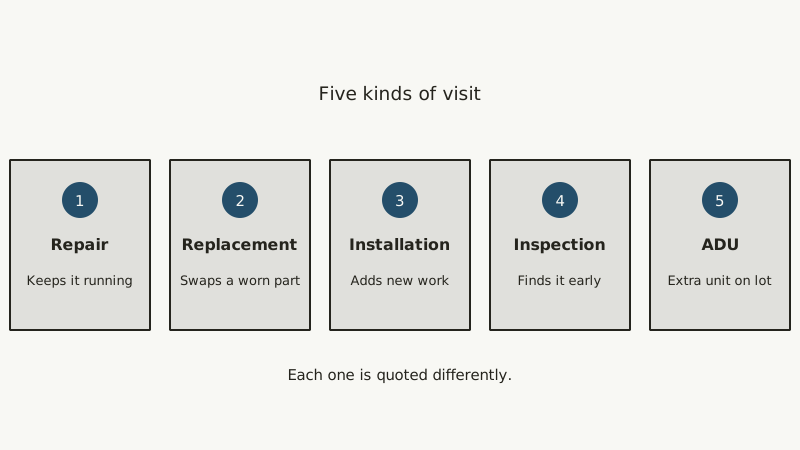
Where the categories get interesting:
- Backyard units (ADUs). A garage conversion or rear cottage needs fresh supply, drain and frequently gas lines, and the plumbing passes through City of Long Beach review. Insist on a written plumbing scope before walls close up.
- Manufactured homes. Pipes tend to run low beneath the floor, often in PEX and sometimes in older polybutylene. The mobile home inspection guide goes through what to look at.
- Shops and restaurants. Grease traps, backflow assemblies and big heaters change the picture; see commercial plumbing.
- Whole-house pipe replacement. After the third or fourth patch on aging pipe, swapping complete runs can cost less than another repair. The repiping overview compares the routes.
What will a visit actually cost around Long Beach?
Published California cost guides cluster around $50 to $250 for the trip or diagnosis, then $100 to $200 per working hour, often with a one-hour floor. Your written quote after the inspection is the figure to hold the plumber to. It should itemize parts and labor so you can compare against another bid.
Four things push the quote up or down:
- Reach. An open cabinet is easy. Anything buried in framing or concrete adds opening and patching time.
- Material. Water heaters and fixtures span a huge price spread, so find out whether the quote includes the unit.
- Permits. The city requires a plumbing permit when a water heater changes out, plus for any gas pipe beyond a short hop. The quote should name who applies.
- Hour of the day. Published guides put evening and weekend rates at about one and a half to three times the weekday figure.
Sources disagree by city and by company, so these amounts serve as a rough guide only. Tighter figures for single jobs appear on the faucet and disposal pricing page and in water heater replacement costs.
Who handles a burst pipe at midnight or on Sunday?
Our phone line is staffed on weekdays during office hours only, and we cannot promise a specific arrival window. When water is pouring into the house after dark, close the main valve immediately, then phone in the next business morning or follow the steps on the emergency plumber page.
Find that main valve today rather than during a flood. Many older Long Beach houses keep it by the meter box or on the street-facing wall, and a valve untouched for decades can seize. Turn it off and on once a year so it stays free.
Gas is a separate matter. A rotten-egg smell means walking out first. Step outside and ring your gas utility: Long Beach Energy Resources, (562) 570-2140, in Long Beach and Signal Hill, or SoCalGas, 1-800-427-2200, in most neighboring cities. A 911 call is also warranted if anybody is injured or in danger. Leave switches alone, skip the hunt for the source, and leave any plumbing visit until the utility declares the building clear.
How do you vet a plumbing outfit before saying yes?
Type the contractor's license number into the CSLB online lookup, read the entire contract, and turn down a deposit above $1,000, or above one tenth of the price if that comes out lower. Written contracts are required once a home improvement job tops $500. On big projects, gather several bids on paper.
Good companies usually:
- Hand over a license number that checks out, and a scope on paper.
- Name who applies for the permit and whether inspection fees are inside the price.
- Explain what caused the failure, not just what to buy.
- Admit when a cheap patch will not hold, and return the old part if you ask.
Star ratings help a little. Read the angry reviews that mention invoices, since billing disagreements are the most common grievance. Our step-by-step page shows what arrives with a quote from us, and a quote requested through the quote form can be held up against this list.
What if money is tight right now?
Contain the damage first: close the little stop under the fixture, or the main valve, and park a bucket beneath the drip, and quit running water into a backed-up drain. After that, request a written quote that splits urgent items from postponable ones. A slow drip may wait weeks. A spraying supply line or a gas fault will not.
Ways people stretch a budget:
- Fix the dangerous item now and book the remainder later.
- Ask the City of Long Beach or your water utility about hardship programs.
- Handle simple swaps yourself where rules allow. Replacing a faucet or disposal in your own home needs no Long Beach permit, but gas work and water heaters do.
- Read your homeowners or renters policy, because abrupt water damage is frequently covered even when the pipe repair is not.
Skip the bottle of chemical opener as a bargain fix for a repeat clog. It eats old metal and leaves caustic liquid waiting for whoever opens the trap next.
Common questions
What does a pipe repair clamp do?
A repair clamp is a metal sleeve lined with rubber that cinches around a pinhole or short split and seals it as the bolts tighten. A plumber fits one to hold a line until a permanent fix is possible. Treat it as a stopgap, since it should not sit on a pressurized pipe for years.
What do plumbers use when store-bought drain cleaner fails?
Most reach for a cable machine or hand auger to break the plug apart, and a small camera pushed down the line. Grease and roots may call for a pressurized water jet. Caustic openers rarely show up in a plumber's kit because they damage older metal and splash on the person opening the trap.
Can a plumber fix a cracked or burst supply line?
Yes. The plumber closes the water, cuts out the damaged stretch and splices in fresh pipe, or replaces the entire run if the material is worn through. Location sets the effort: a line entombed in framing or concrete is dearer to open up than a pipe in plain sight, and opening and patching get quoted separately.
Which jobs count as basic plumbing work?
Basic work covers dripping faucets and fittings, cleared drains, swapped toilets and fixtures, new stop valves and heater servicing. Changes to gas piping, water heater replacement and any rerouting of supply or drain lines move past basic, and the City of Long Beach asks for a permit on those.
Who do I call before changing gas or water lines?
Smell gas? Get outside first, then phone your gas utility: (562) 570-2140 for Long Beach Energy Resources in Long Beach and Signal Hill, or 1-800-427-2200 for SoCalGas elsewhere. For planned changes, contact Long Beach Development Services, Building and Safety, at 562-570-7648 before starting, because permit rules cover water heaters and gas piping. Work done without a permit tends to resurface at resale time or during an insurer's review.
References
- California Contractors State License Board, home improvement contracts
- City of Long Beach, permit questions
- City of Long Beach, mechanical, electrical and plumbing code requirements
- SoCalGas, natural gas leaks
- Published California plumber rates from several consumer cost guides, checked November 2026
Updated