A pipe rarely fails without warning. Weeks earlier there is usually a damp patch, a faint stain, a hissing valve or a bill that climbed for no clear reason. Prevention in a Long Beach house comes down to three habits: know where the water shuts off, keep the pressure reasonable and retire worn parts before they quit. Hidden leaks in general are covered on our leaks page, so this page sticks to stopping a break before it happens.
Is freezing really a worry on the Long Beach coast?
Seldom. Hard freezes are unusual near the water, which means the winterizing tips aimed at colder states mostly miss the point here. An unheated garage, an outside wall or a hillside crawlspace can still get cold enough during a rare snap, so slip foam sleeves over any bare supply pipe there and then turn to the larger risks.
Those bigger threats work quietly. Excess pressure strains every joint. Zinc-coated steel pipe corrodes on its inner wall and gradually thins. Thin-walled copper can pinhole. A shaking quake can snap a fitting or tip a loose water heater. The article on what makes a pipe burst walks through each of them.
Why should everyone in the house know the main shutoff?
Because shutting that one valve is what limits the damage once water is escaping. Around Long Beach you will find it in the curbside meter box, fixed to the wall that faces the street or tucked inside the garage. Rotate the handle through its full travel and see that it moves without a fight.
A valve ignored for decades can seize or weep around the stem. Exercise it yearly, closing then reopening. A handle that will not budge needs a plumber, and the best time to call is while everything is dry. Show every adult where it is and hang a bright tag on it.
Do the same exercise at each toilet and sink. Those little stops cut off one fixture alone, leaving the kitchen and showers running.
How much pressure is too much, and how do I read it?
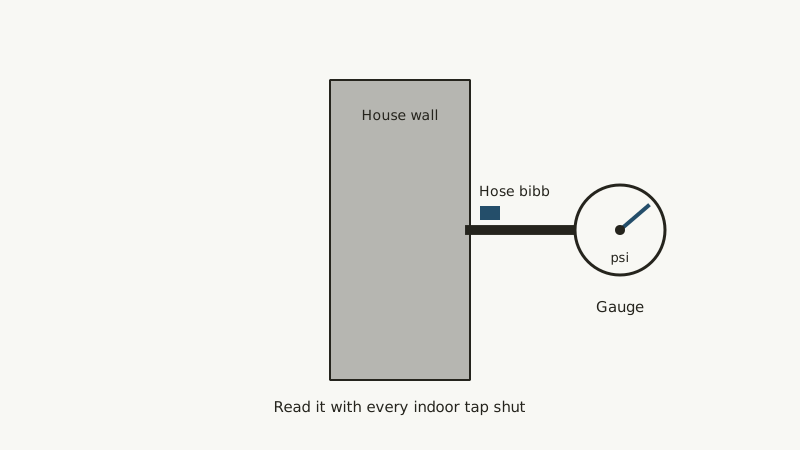
A reading above roughly 80 psi is where plumbing code summaries say a regulator is expected, and sustained high pressure punishes washer hoses, joints and heater tanks. Spin an inexpensive gauge onto a hose spigot outside, close all indoor taps, then note the needle, and repeat at another time of day.
When the number is high, the cure is a pressure reducing valve. Our walkthrough on adjusting a regulator valve explains how the gauge and valve work together. A tired regulator is a frequent reason an older house knocks and groans.
Which parts give out first?
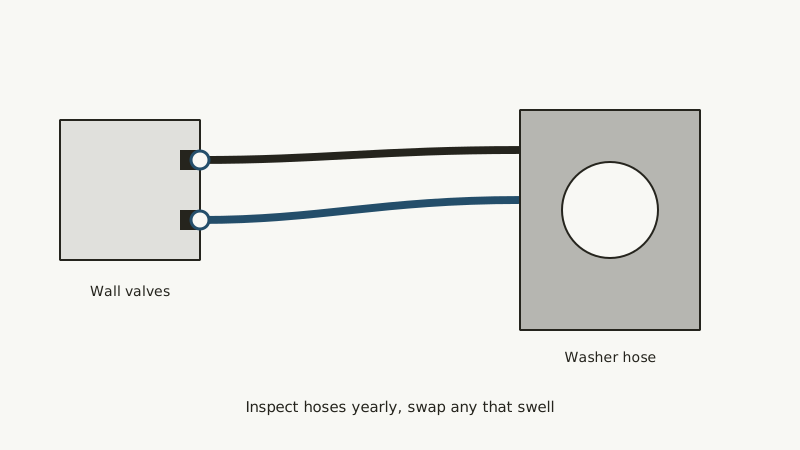
Flexible hoses beat copper to the finish line. Laundry hoses, toilet supply lines, faucet connectors and ice maker tubes sit under constant pressure and flex with use. Inspect them each year, and retire any that swell, show rust at the nut or sweat.
A quick annual round:
- Laundry hoses: cracked rubber, bulges or rust on the couplings.
- Toilet and faucet lines: a dry tissue held against each connection will show a weep right away.
- Water heater: rust streaks near the base, mineral crust on connections and tank straps, which the City of Long Beach requires for earthquakes.
- Under-sink traps and stops: green or white crust where metal meets metal.
Galvanized steel gets its own line. Plenty of bungalows around the Harbor, built before the sixties, still contain some, and after enough corrosion, replacing beats patching. The galvanized pipe guide lays out that decision.
What does a small leak look like before it turns into a break?
Use the meter as a detector. Write down the meter reading, let two hours pass without using water, then compare. A different number probably means a leak, says the EPA. An unexplained jump on the bill is the other clue, with the usual causes listed on the high water bill page.
Slow drips add up. Across a typical household, the EPA counts more than 9,300 gallons slipping away each year. Hunt for ceiling stains, floorboards that feel warm, a damp smell, mold in a cabinet or the sound of water moving when nothing is on. For a longer list, see signs that a pipe has failed.
If the culprit hides in a wall or slab, a tradesperson with acoustic gear or a camera can pinpoint it without demolition. Typical fees are listed in the leak detection price guide.
What are the first five minutes if a line lets go?
Shut the main. After that, a tap on the ground floor lets the remaining pressure drain. Stay away from outlets, the panel and wet cords. Where water has reached wiring or the panel, stay out and wait for help instead of throwing breakers from a wet floor. Take photos, mop up and start drying, since wet material invites mold, as EPA guidance on cleanup notes.
Our burst pipe emergency page gives the full sequence. Our phones are covered Monday through Friday only, so outside those hours the valve is your protection.
Smelling gas after a quake or a break? Exit first. From outdoors, report it to the supplier of your meter: Long Beach Energy Resources at (562) 570-2140 for Long Beach and Signal Hill, or SoCalGas at 1-800-427-2200 for neighbors such as Lakewood, San Pedro and Seal Beach. Injuries or fire get 911. Never hunt for the source yourself.
Common questions
How often do supply hoses need replacing?
Check them annually. Replacement intervals vary by maker, so follow the label, and in practice many plumbers swap laundry hoses every few years. Replace any hose that bulges, kinks, rusts at the fitting or weeps. Braided stainless versions last longer, though they wear out as well.
Does a homeowner policy usually cover pipe failures?
Wording differs between policies. Sudden, accidental discharge is often included while slow seepage and neglected maintenance are often left out. Read the terms or ask your agent in advance, and see the state insurance department's consumer guides. Photos and quick drying support any claim.
Is it smart to close the main when we travel?
For a week or longer, yes. Closing the main takes seconds and removes the chance of a flood in an empty house. Leak sensors and automatic shutoff valves add a layer. Check the water heater manual for a vacation setting, and ask a plumber if your system is unusual.
What can a plumber change to lower the risk?
Measure pressure, fit a regulator and expansion tank, replace a stuck main valve, swap worn hoses and add heater straps. Repeated leaks in old galvanized or failed plastic pipe may justify a repipe quote. You are handed a written quote first, and work starts afterward.
The rest of our guides start from the plumber guide for Long Beach.
References
Updated