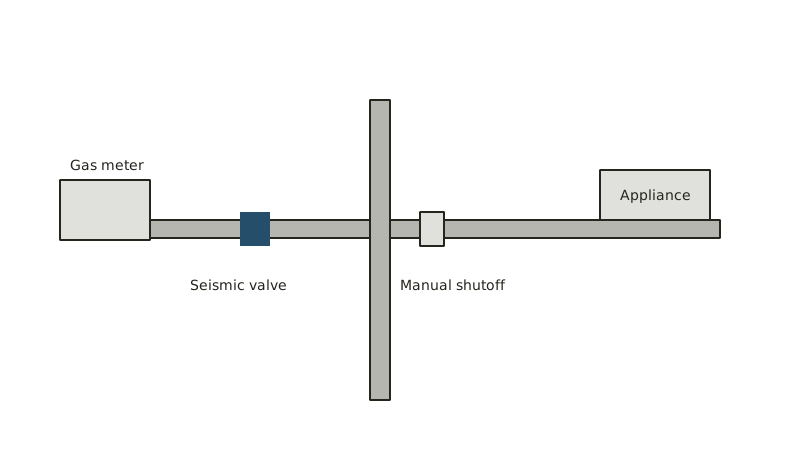
Shaking can split a gas pipe inside a wall, and nobody sees it happen. An automatic seismic valve is the part built to stop the flow before a spark finds it. Fitting one counts as gas line work: a permit, a contractor and a leak test. Below: how the valve behaves, who pays what, and what to do once it trips.
What actually closes the gas: the meter valve or an automatic device?
Two different valves exist. The meter valve belongs to your gas utility and is closed by hand with a wrench. An automatic seismic valve is a separate mechanical unit fastened to the house-side pipe right after the meter, and it closes by itself once the ground motion passes a preset level. It does not replace the manual valve.
Think of it as a sentry. A weighted ball or pendulum inside the housing falls when the shaking is strong enough, and a seat closes the line. No power or battery runs it. That is its whole appeal: it still works in a blackout, and when the house is empty.
The meter is another story. SoCalGas tells customers to touch the meter only when escaping gas is noticed, and says restoring service is up to its employees, a wait that can run to several days after a quake. Long Beach Energy Resources runs its own gas system for Long Beach and Signal Hill, so ask it what it advises. In both cases the advice is the same: nothing smells, nothing gets turned.
Is an earthquake valve required in Long Beach?
No City of Long Beach rule we found forces a homeowner to install one, and California has no blanket mandate either, although the state does publish standards a valve must meet. Los Angeles keeps its own seismic valve provisions in its municipal code, which matters for San Pedro and Wilmington addresses. Phone Building and Safety to confirm your property.
Our pages for San Pedro and Wilmington note how those neighborhoods differ, and the wider code picture is in residential gas piping codes.
Long Beach's permit counter answers at 562-570-7648. Homes in San Pedro or Wilmington deal with LADBS instead, where rules for property sales and big remodels can differ. Insurers occasionally ask about a valve, so read your policy; we promise no discount.
What Long Beach does require is a plumbing permit for any gas piping work, with an inspector present for the leak test. The same permit page requires an accessible gas shutoff ahead of an appliance connector, so improvising with a wrench is a poor idea.
Seismic valve installed: what is the bill, and how long is the visit?
In published guides an installed valve costs about $300 to $800 around Los Angeles, permit often folded in, with a few outliers on either side. Expect a few hours of work. A cramped meter location, a corroded fitting or a missing manual shutoff all push the total up.
What shapes the quote:
- Hardware. An approved-list model is a minor slice of the total.
- Pipe condition. Rusty or leaky threads on 1920s through 1950s houses can add repair work.
- Meter location. Bungalow side yards in Belmont Shore or Bixby Knolls can be tight; a straight exposed run is quick.
- Permit and inspection. Budget for the City permit fee and for the leak test.
On the day, the plumber closes the gas (sometimes through the utility), mounts the valve plumb and level on the house side, soap-tests every joint, and calls the inspector. Pilot lights on appliances need relighting afterward. The broader pricing picture is in what gas line work costs.
The valve clicked shut: how will I know, and how do I reopen it?
Many valves show a red flag when tripped, and gas appliances stop working. Close the manual shutoff, sniff for gas, then work through the manufacturer's reset sequence, which often means turning a reset cam until the flag shows green. A gas smell or any doubt means no resetting: phone your utility or a plumber.
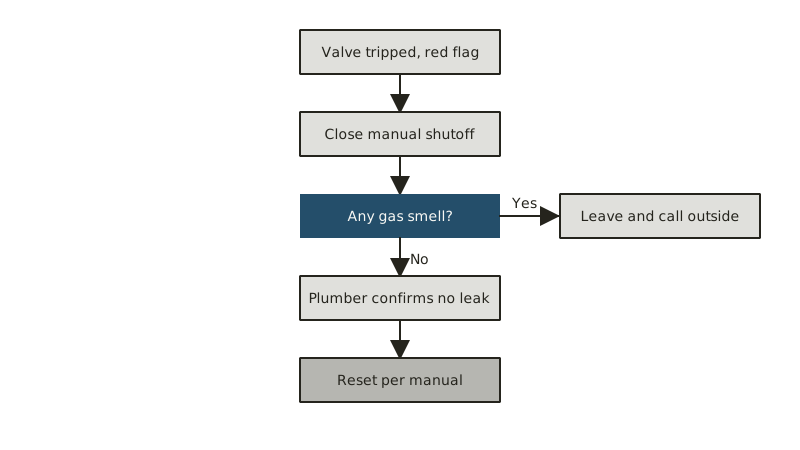
Reset steps differ by model, so keep the manual near the valve. A valve that trips can mean a real leak, a big aftershock, or just a sensitive setting, which is why a plumber should confirm there is no leak first. Some tripped valves also open the line again only after the pilot lights and appliances are checked.
SoCalGas says the automatic valve and the meter valve are two distinct pieces of equipment, and that it has no rebate program for the automatic type at present. Anything at the meter itself stays in utility hands.
Shaking has stopped: what do we do in the next few minutes?
Check everyone for injuries, then use your nose and ears. Any hint of gas means leaving and calling from outside: Long Beach Energy Resources (562-570-2140) supplies Long Beach and Signal Hill, SoCalGas (1-800-427-2200) supplies neighboring areas, and 911 covers anyone in danger. Ready.gov also warns against re-entering a damaged building. No odor and no hissing: the meter stays alone, and you keep your attention on the people and the house.
A flashlight and an adjustable wrench kept near the meter are for a confirmed leak only. If the trouble is water instead of gas, our page on urgent plumbing problems covers what to close first. Long Beach also requires strapping on every water heater, which keeps a tank from toppling and tearing its gas connector.
Common questions
Will the install eat up my whole day?
Budget a few hours for the hands-on work, after the valve and permit are lined up. Inspection and utility coordination run on their own calendar. Rusted piping, an awkward meter spot or a missing manual shutoff can stretch the visit, so the quote should say which of those applies.
What questions screen out a bad installer?
Start with the contractor's state license number and check it. Learn the valve model, whether California lists it as approved, who handles the permit, and what the figure includes. Insist on a written quote before the first wrench turns, and walk away from any offer to skip the inspection.
Is someone needed at home during the work?
Be home when work begins, because the contractor reaches both the meter area and the house, and again when gas returns and pilots are relit. In between you are free to step away, as long as someone can be reached by phone. Mention locked gates, dogs and pilot-light appliances beforehand.
Does it protect against every kind of gas leak?
No, and it was not built to. Its trigger is strong ground motion, so a slow seep or a cracked appliance connector goes unnoticed. Treat it as one safeguard among several: sniff for gas after every quake, keep the manual shutoff reachable, and phone the utility at the first odor.
Every service and price guide is on Harbor Lights Plumbing.
References
- SoCalGas, Home Energy and Safety Guide, earthquake and gas valve pages
- Long Beach Utilities, gas service and emergency line
- City of Long Beach, plumbing permit requirements
- Building Almanac, Automatic Gas Shutoff Valves
- Ready.gov, earthquakes
- Published seismic gas valve installation cost guides, checked November 2026
Updated