The laundry room shows the answer faster than the machine does. Run the hot tap at a utility sink or the shutoff box beside the washer. Hot there and cold in the drum means the problem is the washer or its hose. Cold at the wall too means hot water is not reaching that spot, and the cause is upstream, often in the water heater or the pipe run. Start with that two-minute test.
Why is the drum filling cold while the sinks run hot?
The common causes are hot and cold hoses connected to the wrong inlets, a plugged inlet screen on the hot side, a cycle or eco mode that picks cold, or a worn inlet valve inside the cabinet. If other taps deliver heat, the heater is not at fault, so inspect the hookup behind the washer first.
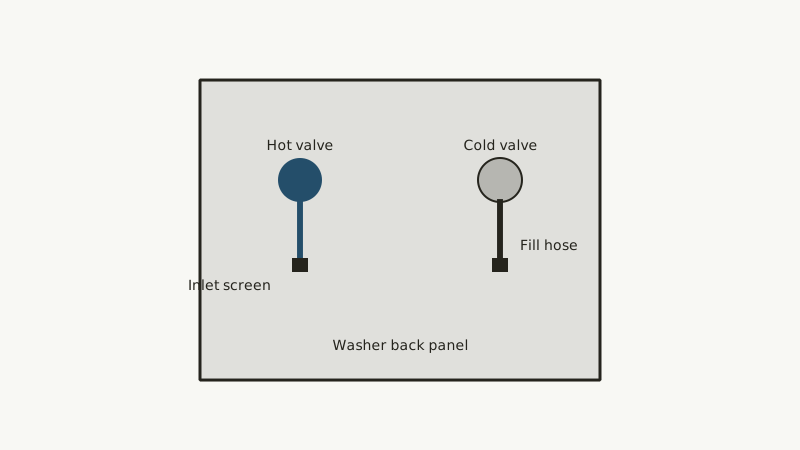
Most washers have two inlets, labeled hot and cold, and a different hose on each. After a move or a hose swap, they are sometimes reversed. A red band or marking usually identifies hot. Switch them and run a warm cycle to see.
Settings matter too. Many modern machines default to cold or lukewarm washes to save energy, and some limit hot temperatures unless you pick a sanitize option. Check the dial, the touch panel and the manual before blaming a part.
How do I unclog an inlet screen or straighten a hose?
Close both wall valves, spin the hoses off the back panel and look into each inlet port. Each holds a small mesh screen that can clog with grit or mineral flakes. Pick the debris out gently with tweezers or a toothbrush, rinse the screens and reconnect with the washers (the rubber seals) in place.
A pail under the hose catches the water. While the hose is off, hold the end toward the sink and open the hot supply to flush sediment. Replace any hose that is cracked, bulging or rusted at the fittings. Hoses are cheap, and a split one floods a house, which is why our burst pipe prevention page suggests a yearly look.
Kinks behind a washer that has been pushed against the wall are common. Pull the machine forward a few inches and check the hot line for a tight bend.
Could the water heater be too far away or too weak?
Yes. Laundry rooms and garages are often the farthest point from the heater, so the hot line holds cooled water. The washer only draws for a short time, so it may take a lot of cycle time for hot water to arrive. A water heater set too low, or a tank that has run out, also gives lukewarm fills.
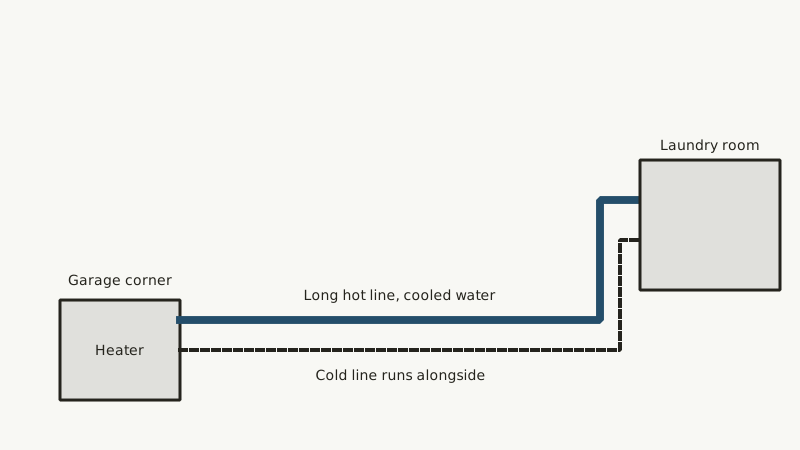
A smaller or older tank may handle a shower but not hot wash cycles back to back with a dishwasher. Many Harbor-area bungalows were built with a single small heater in a garage corner and long copper or galvanized runs to the rest of the house, so delays are common.
If the heater seems weak everywhere, work through the hot water checklist. Resist cranking the thermostat, because hotter settings raise scald risk and Wikipedia notes tank thermostats are not exact readings.
What if the hot valve in the wall is the weak link?
Test the wall valves. A valve box in the wall has hot and cold stops, and the hot stop can be stuck, half closed or blocked inside. Turn each off and on once, with the hose disconnected and pointed into a bucket. A trickle on the hot side with strong cold flow points to a blocked or failing valve, which a plumber can replace.
Older boxes with gate or multi-turn valves seize, and a worn washer inside can cause low flow. Replacing the valve may be a short job, but it involves cutting water to the house and working with soldered or push-fit connections, so many people prefer to call.
Weak hot flow at other fixtures as well? Low hot water pressure explains how scale and a valve left partly closed near the heater cause it. The kitchen-only variant lives in the kitchen sink guide.
When is the washing machine itself at fault?
If hot arrives at the hose end but the drum fills cold, the machine's inlet valve, a temperature sensor or the control board may be at fault. Some washers also have a solenoid that fails on just the hot side. Those are appliance repairs, not pipe work, so consult the manual or an appliance repair company.
Heater faults belong to a plumber, and the panel and gas fittings are off limits to homeowners. Notice gas near the heater or a gas dryer? Walk outside before anything else. In Long Beach and Signal Hill the report goes to Long Beach Energy Resources, (562) 570-2140. Lakewood, San Pedro, Seal Beach and similar areas use SoCalGas, and its number is 1-800-427-2200. Anyone hurt, or any fire, means 911.
A heater swap needs a City of Long Beach permit. To judge whether it is worth it, weigh the replacement prices against the typical lifespan.
Common questions
Who fixes this, a plumber or an appliance technician?
That hinges on where the heat disappears. Hot at the hose end with a cold drum points to the appliance. No hot at the laundry spot at all points to plumbing or the heater. A bucket test at the wall splits the two in a couple of minutes.
Do I need hot water for laundry?
Not always. Many detergents work well in cold water, and cold saves energy. Hot helps with greasy stains, sanitizing and some fabrics. A washer that fills cold on a hot setting is still faulty, but a cold wash on purpose is fine. Follow the care labels on your clothes.
Which hose carries the hot water?
Look for a red band or tag on the hot hose and blue on the cold, and for H and C stamped beside the machine's inlets. Follow the hose back to the wall and check which valve it uses. If unsure, test the valves one at a time with the hose disconnected.
Is this a good moment to replace the hoses?
With hoses several years old, yes. Braided stainless hoses cost little and resist bursting better than plain rubber, though any hose can fail. Replace any that bulge, crack or rust at the ends. Snug them by hand, add a final partial turn with pliers and watch for drips.
For the wider picture, start with plumber long beach.
References
- City of Long Beach, plumbing permit and water heater requirements
- California Contractors State License Board, hiring a contractor
- Washing machine and water heater manufacturer manuals (settings and inlet valves differ by model)
Updated