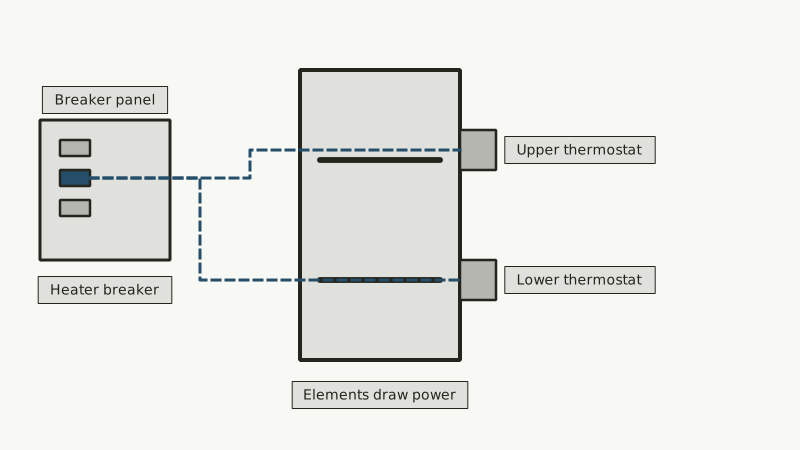
A failed part can make an electric tank work harder, longer or both, and your bill shows it. The usual suspects are a stuck thermostat, a leaking hot line that keeps the heater refilling and reheating, or a tank packed with sediment. If yours burns gas, look elsewhere first. Fixes live in our heater repair overview; this page is about reading the evidence in your bill.
Water heating is a big slice of a home's energy use. The Department of Energy's 2022 guide calls it the second largest energy expense and puts it near 18 percent, so a fault there matters.
Which water heater faults push the electric bill up?
Four stand out. a thermostat that stays on and overheats the water, a heating element that sticks on or draws more than it should, sediment that makes elements run longer, and hot water escaping through a leak so the tank keeps reheating fresh water. Each makes the heater draw power for hours it should be idle.
The thermostat case is the dangerous one. Overheated water can scald, and the T&P relief valve may begin to discharge. Water that feels much hotter than usual deserves a lower setting and a plumber visit, because the thermostat or its limit switch may be on the way out. DOE suggests a 120 degree Fahrenheit setting for most homes, which saves energy and spares your hands.
Sediment is mineral grit that drops to the tank floor. On an electric heater it can bury the lower element, so it works harder and burns out. Listen for rumbling and slow recovery, and expect a bill that drifts upward across months instead of jumping overnight.
Does a gas water heater affect my electric bill?
Barely. A gas tank may use a little electricity for an igniter or controls, and a power-vented or tankless gas model uses a fan and electronics, but the big heating load comes from gas. If your electric bill spiked and you have a gas heater, check the air conditioning, a pool pump, a dryer or a new appliance.
Some Long Beach homes run mixed fuels, such as an electric range with a gas heater, or an electric heater in a converted garage unit. The rating plate on the tank says which fuel yours burns. A gas heater that fails shows up on the gas bill, not the electric one. Unsure which company bills which fuel? The header of each statement says.
How do I confirm the heater caused the jump?
Line up several months of bills, and look at kilowatt hours, not dollars, since rates change. A heater fault often shows as a steady rise with no change in routine. Then test the heater: is the water hotter than before, is the tank always warm to the touch, are you running out of hot water faster, are there noises or drips?
For a rough check, turn off the heater at its breaker for a day and see whether the home's usage on a smart meter or app drops. Attempt it only when the breaker is easy to reach and dry, keep showers short, and flip it back afterward. Do not open an electric panel, and do not touch wiring on the heater. An electrician or plumber should handle anything inside.
A hot water leak is the sneaky one. By EPA WaterSense figures the household average tops 9,300 gallons of leaks a year; a leak on the hot side means the heater re-warms every gallon. Read the meter with all taps shut, and hunt for damp spots near the heater, along hot lines and under sinks.
Could an old or poorly insulated tank be the problem?
Yes. Heat leaks out of every tank, and an old, thin-walled one loses more. DOE says that if the tank feels warm to the touch, insulating it can cut water heating costs by roughly 7 to 16 percent a year, and a blanket can pay for itself in a year or less. Insulating hot pipes saves a further few percent.
Follow the cautions: on an electric tank, do not cover the thermostat. A tank parked in a cool garage corner loses heat faster than one inside the living space, and an elderly tank wastes more again. If the unit is over 10 to 15 years old, replacement may save more than another repair; the replacement timing guide has the age markers.
Newer models, including heat pump water heaters, are designed to use less electricity, and our page on comparing tank and tankless heaters walks through the options.
Which checks come first when the heater is my suspect?
Check the temperature setting, look for leaks and listen for noises. Lower a thermostat that is set above 120 degrees. If water pools around the heater, shut the cold supply and call a plumber. If you smell burning, see scorch marks or hear a hum from wiring, switch off the breaker and call a professional.
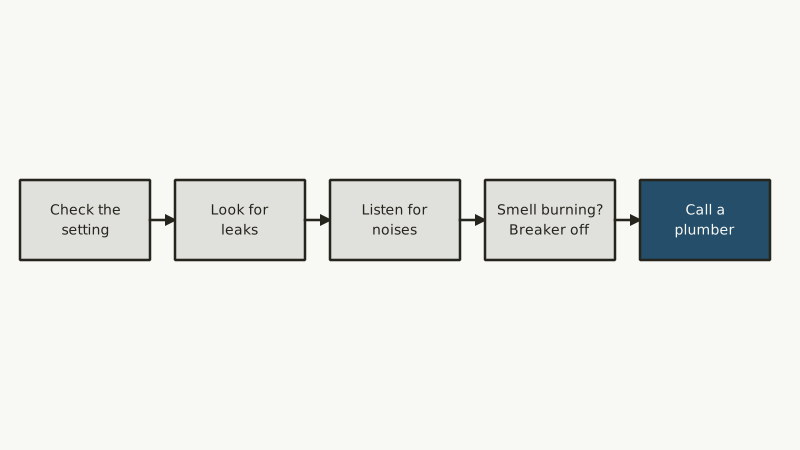
Testing the elements, thermostats and relief valve, flushing sediment and judging repair against replacement are all plumber tasks. Long Beach requires a permit when water heating equipment is replaced, and most plumbing work in California needs a contractor license, which the board's website lets you verify. For an urgent problem, see emergency water heater repair. To ask for a visit, use our quote page.
Common questions
Is the heater really able to inflate my power bill?
It is possible when the unit is electric and has a stuck thermostat, a bad element, heavy sediment or a hot-water leak downstream. Each fault keeps the heater running longer than needed. Even a healthy electric unit is a heavy user, though, so on its own it can make up a large part of the total.
How long will the repair eat up?
Replacing a thermostat or element is usually a one-to-two-hour call with the part in hand. Flushing sediment stretches that, and a dead tank means a swap of about half a day plus a permit. Timing gets firmer after the plumber sees the unit.
What do I want to know before booking?
Find out which parts get tested, whether the quote bundles parts with labor, and the plan if the tank shell is the trouble. Confirm who obtains a replacement permit. Run the contractor through the state's license search, and keep the written quote.
Must I attend the appointment?
Helpful, yes. Someone needs to show the heater, describe the bill pattern and okay changes to the plan. Away that day? Leave a phone number and set up access through a trusted person. Clear the floor around the tank so the valves and the breaker box stay reachable.
This guide is one of many on plumber across Long Beach.
References
Updated