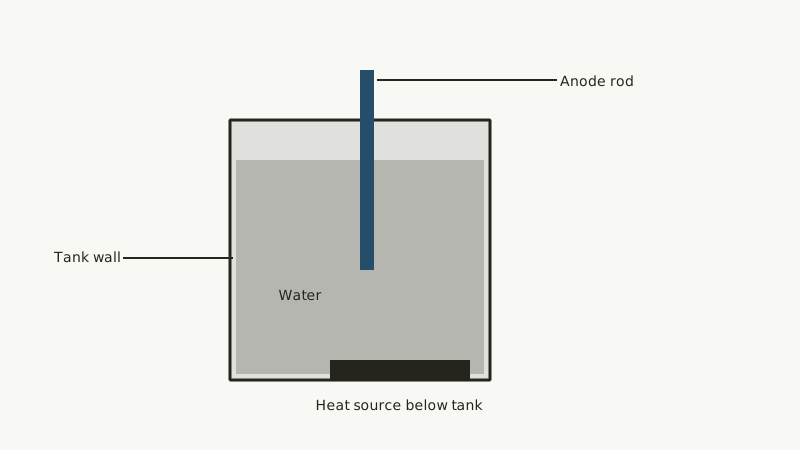
Inside every steel tank water heater, a thin glass coating separates the water from the steel, and that coating always has pinholes. The anode rod, a metal stick dangling in the water, is there to waste away ahead of the steel. Once the stick is spent, the shell is next in line. The sections that follow cover judging the rod, the price of a swap and the line past which a tank is not worth saving. It sits alongside our broader notes on water heater repair.
How does a sacrificial rod keep a tank from rusting?
Its core is steel wire wrapped in magnesium or an aluminum alloy, metals that give up electrons more easily than steel does. Water inside the tank completes the circuit, so the soft metal dissolves and the tank wall is spared. Wikipedia lists magnesium and aluminum-zinc anodes as common choices for water heaters.
Look for it on top of the tank, either beneath a hex-headed plug in the lid or sharing the hot outlet fitting. Once the wrapping has dissolved, bare wire remains, and attack on the tank wall begins, followed by pinhole leaks.
Some heaters use a powered anode instead, which feeds a tiny electric current rather than wasting away. It costs more at the start.
When is it time to pull the rod out and look?
Nobody can name one date. Plumbing contractors tend to say check around year three to five, then every year or two, and the manual for your model may say otherwise. A water softener, a hot thermostat setting and heavy daily use shorten the life of the rod.
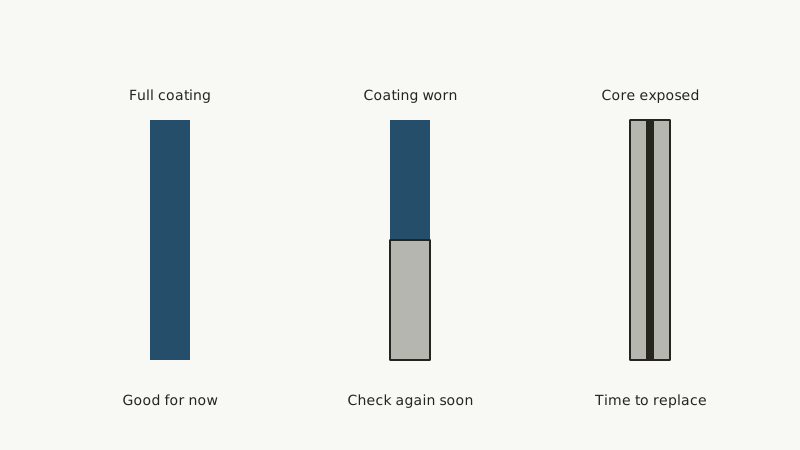
A finished rod looks pitted, with long stretches of bare core wire or a body shrunk to a fraction of its first thickness. Some guides treat six inches of exposed wire as the cutoff.
Local water matters, not salt air, since the metal sits inside a closed tank. Hardness differs among Long Beach areas, and San Pedro and Wilmington are supplied by another utility, so let the rod itself tell you, not a calendar.
Can a homeowner tackle the rod on a Saturday?
Possibly, with a breaker bar and a deep socket sized to the hex head (frequently 1-1/16 inch, though models vary). Cut power or set gas to pilot, close the cold supply, relieve pressure, then drain a few gallons. Rods seize, water is hot, and a rusted tank can tear when forced.
An old tank is the real trap. Past roughly a decade, a fresh rod cannot undo rust that is already established, so have someone assess the shell before you spend a Saturday on it.
Gas models raise the stakes. Skip any relighting you are unsure about and never touch the gas piping, a trade the state limits to people with a contractor license. See our thermocouple page for how far a DIY job should go.
What will the job run when a plumber does it?
Published 2026 guides cluster around $100 to $300 for a rod swap including the part, with outliers higher. The rod costs $20 to $50 and powered models more. Labor reflects overhead clearance and a stuck old rod. Take these numbers as a rough benchmark, then rely on the written quote.
Set that beside a new tank: the replacement cost page shows the alternative, and the lifespan guide helps you decide. A new rod in a young heater is a bargain. In a tank weeping at its base, it is money thrown away.
Overhead room is the usual snag. Many older Long Beach bungalows tuck the heater into a closet or garage alcove with only a few inches above it, so tell the plumber early, since a flexible segmented rod may be needed.
Rust, leaks or a sulfur smell: save the tank or scrap it?
Scrap it when the shell leaks, the hot water runs brown while the cold runs clear, or the fittings are heavily corroded. Bacteria working on the rod are a frequent source of rotten-egg odor in hot water only, and a plumber may flush the tank or fit a different rod to calm it.
A puddle under a tank rules out repair, because a leaking shell cannot be patched. Our urgent heater repair page gives the first moves. Close the cold valve to the unit and cut power or gas to hold damage down.
New heaters in Long Beach need a plumbing permit and must be strapped against quakes. A relief valve with a proper discharge pipe is also part of code, covered in the relief valve article.
Does paying for rod service make sense financially?
Heater under roughly eight, dry underneath? Usually yes. A bill below $300 can stretch the tank's life, postpone a larger expense and support warranty paperwork if you keep receipts. Many companies that handle heating, air conditioning and plumbing fold a rod check into a heater tune-up.
A tank past twelve years is on borrowed time. Spend on a replacement instead, after comparing designs, including the trade-offs in tank versus tankless. A tune-up should also flush sediment, test the relief valve and confirm the thermostat setting, so ask what is in the visit.
All of this is general, and your own manual wins. The plumber makes the final call at the tank.
Common questions
Magnesium or aluminum: which rod suits my tank?
Magnesium protects most strongly and is the usual factory part, yet in some water it brings a sulfur smell. Aluminum-zinc lasts longer in hard water and can cut the odor. Powered anodes avoid it entirely. Because the wrong type can complicate a warranty, check the manual and ask the plumber.
Will a new rod cure hot water that smells like eggs?
Sometimes. The smell is often bacteria living off the rod's byproducts, so a different rod plus a flush can help, though no result is certain. If the cold tap smells too, the source is elsewhere. A plumber can sniff-test both lines and tell you where to look.
What if I skip the rod and plan to replace the heater later?
The rod is the least expensive defense a tank has. Without it, corrosion starts, and a failed tank soaks floors and walls. Timely replacement often buys years. A heater that is already elderly deserves the money as a down payment on a new one.
Does swapping the rod require a permit?
A whole new heater does, from the city's building division. The rod is maintenance inside the tank, so ask the plumber how Long Beach treats it. Anything done to gas piping or the relief valve needs the city's sign-off, and a contractor who holds a state license.
The rest of our guides start from plumber long beach.
References
- Wikipedia, Sacrificial anode (magnesium and aluminum-zinc anodes in water heaters)
- City of Long Beach, plumbing permit and water heater requirements
- California Contractors State License Board, hiring a contractor
- Published anode rod replacement cost and interval guides from plumbing contractors and parts sellers, checked November 2026
- Water heater manufacturer manuals (inspection intervals vary by maker)
Updated