Why has my tankless gas water heater stopped heating?
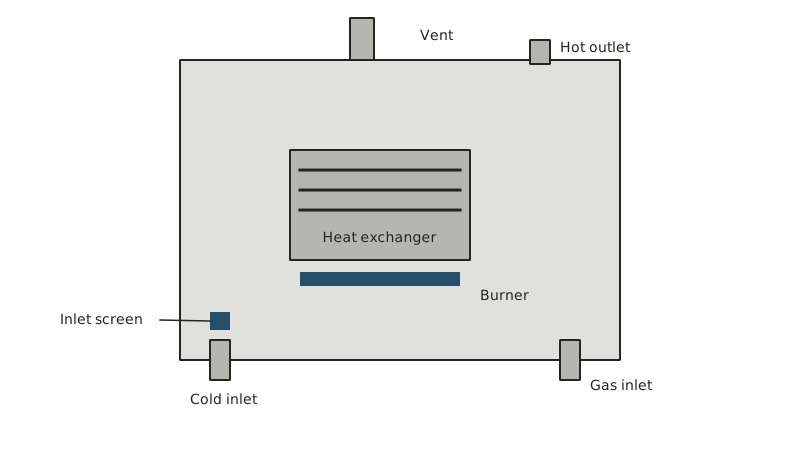
Likely suspects: mineral scale inside the exchanger, a dirty inlet screen, an ignition or flame fault, poor venting or combustion air, or too little gas arriving. A code on the display normally narrows the list, so find it in the manual before pressing reset a second time. All heater types are covered on the water heater repair plumber page.
Start with what changed. A unit that heated well last month and now runs lukewarm often needs descaling. One that will not light at all is an ignition, gas or vent question. One that heats and then drops to cold when you open a second tap may be maxed out by demand, which is a sizing issue, not a fault.
If you want the overall repair picture for all heater types first, see the water heater repair plumber page. This one is specific to gas tankless units.
What do tankless water heater error codes mean?
Codes differ by brand, but the pattern is similar. Rinnai units, as an example, flag scale buildup with LC, no ignition with 11, flame failure with 12 and overheating with 14 or 16, and installer guides tie 11 and 12 to gas supply, igniter or vent. Check the manual for your brand before acting on any code.
| What the unit reports | What it usually points to |
|---|---|
| Scale or flow code (Rinnai LC) | Heat exchanger scaling, needs a flush |
| No ignition (Rinnai 11) | Gas off, low gas, igniter or wiring |
| Flame failure (Rinnai 12) | Vent or combustion air trouble, gas pressure |
| Overheat (Rinnai 14, 16) | Scale or flow restriction |
| No code, lukewarm output | Dirty inlet filter, scale, a crossed line |
Installer guidance is to reset a unit no more than twice for ignition or flame codes. If it fails again, stop resetting and book a visit.
How much of a tankless repair can an owner do?
Owners can clean the inlet screen, flush the unit using the maker's descaling method and confirm the gas valve and power are on. Opening the gas train, swapping an igniter or sensor, touching the vent or altering gas pipe belongs to a contractor, because a gas mistake means fire and carbon monoxide danger.
The safe list is short:
- Check that the gas shutoff is open and the unit has power.
- Look at the display for a code and write it down.
- Clean the cold inlet screen after closing the water and gas valves.
- Leave the vent, burner and sensors alone.
A gas odor means no resets. Walk out and phone from outside. Long Beach and Signal Hill gas customers reach Long Beach Energy Resources at (562) 570-2140, and 911 covers anyone in danger. Neighboring cities buy gas from SoCalGas, reachable on 1-800-427-2200 in an emergency.
How does hard water damage a tankless heater?
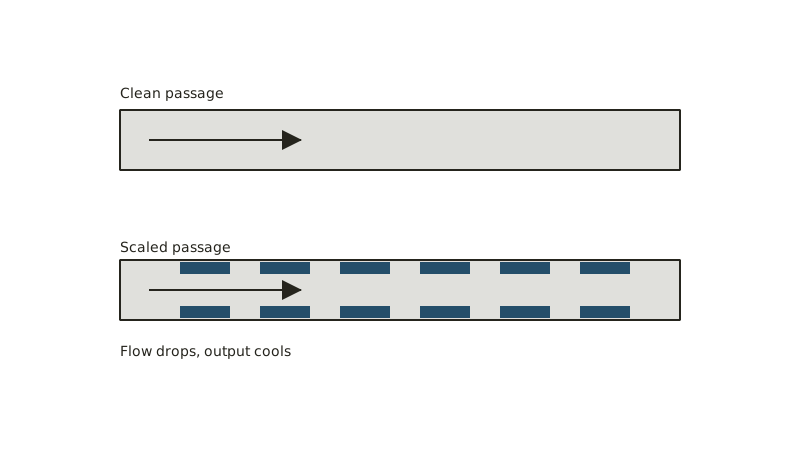
Minerals in the water bake onto the heat exchanger and narrow its passages. Flow drops, the unit overheats and the output cools. Makers call for a yearly flush, sooner in hard water, and warranty terms can depend on it. Hardness is listed in your supplier's water quality report.
Long Beach homes take water from the city utility, which issues a yearly report, while San Pedro and Wilmington are on LADWP with a report of its own. Find the hardness number in whichever applies to you. Treating the water, with a softener or scale inhibitor ahead of the heater, slows the buildup; softener installation lays out the options.
A flush is cheap compared with an exchanger: guides show professional descaling at about $150 to $350, against $600 to $1,300 to replace the exchanger. Some overheat codes that look serious clear after a proper flush.
What does tankless water heater repair cost?
Published guides put repairs at roughly $150 to $1,300, with many jobs near $600. A diagnostic or trip fee runs about $85 to $200. Descaling is $150 to $350, sensors $150 to $400, fuses $50 to $200, and a circuit board $400 to $800. A full replacement runs $2,500 to $4,500 installed.
| Repair | Guide range |
|---|---|
| Diagnostic visit | $85-$200 |
| Descaling flush | $150-$350 |
| Sensor | $150-$400 |
| Circuit board | $400-$800 |
| Heat exchanger | $600-$1,300 |
| Replace the whole unit | $2,500-$4,500 |
Those figures are nationwide, so a Long Beach quote may differ. New installs are priced separately in tankless heater installation costs. One guide suggests repairing units under about twelve years old and replacing past fifteen or when the exchanger leaks, which matches how most plumbers talk about it.
When should you replace instead of repair?
Replace when the heat exchanger leaks, when the unit has passed about fifteen years, or when repair estimates edge close to a new heater's price. Repair younger units whose problem is a sensor, filter, igniter or scale. Ask for both options priced, and for the diagnosis in writing.
Think about why it failed, too. A new tankless heater on the same hard water and the same undersized gas line will fail the same way. These heaters burn a large amount of gas at once, which makes the gas line and vent important, and piping changes are regulated work. The quote should name who obtains the permit. Households weighing a switch back can compare the two in tank versus tankless.
For a cold-shower emergency, there are pages on a tankless heater giving no hot water and urgent water heater repair.
How do you book a tankless heater repair?
Note the brand, model, age, error code and what you have tried. Photograph the display and the data plate. Put them in the quote form, which we read weekdays between 9am and 5pm. After that a plumber visits the house, and the price reaches you in writing beforehand. The Harbor Lights home page shows the steps.
State law makes a contractor license mandatory on jobs of $1,000 or more, so request that number. Water heater work is also a permit matter in Long Beach: replacing a unit or altering gas, venting or relief piping is normally permitted, and the contractor pulls it. Keep the invoice and any maintenance record, because a warranty claim on a heat exchanger usually depends on proof of flushing.
Common questions
How often should a tankless gas water heater be flushed?
Annually at minimum per manufacturer guidance, and in hard water sometimes every six months, so an owner with scaly fixtures should flush sooner. A small pump circulates descaling fluid through the exchanger. Stick to the maker's method and approved products, as warranty terms can depend on it.
What makes the water turn cold mid-shower?
Possible reasons: a flow too faint for the burner to stay on, a second tap pushing demand past capacity, a dirty inlet screen, scale choking the exchanger, or cold water crossing into the hot line. Run one fixture alone and clean the screen. If it keeps happening, a plumber can test the flow rate and check how the unit is piped.
Is a faulty tankless heater always replaced?
No. Most faults can be repaired, including scale, sensors, filters, igniters, fuses and boards. Replacement makes sense when the exchanger leaks, the unit is old or repair costs nearly as much as a new heater. A plumber should diagnose before quoting, and you should be shown both prices.
Does a repair call for a permit?
Simple repairs and flushes usually do not. Replacing the unit or changing the gas line, venting or relief valve normally does, and the contractor handles the application. Rules differ between Long Beach and neighboring cities, so confirm with the plumber, and keep the paperwork.
What does a tankless service plan cover?
Plans typically cover an annual inspection, descaling and filter cleaning, and guides show $100 to $300 a year. Compare what is included, such as parts, travel and priority booking. A one-off flush from a local plumber may cost about the same as a year of a plan.
References
- HomeGuide, tankless water heater maintenance cost (2026)
- Angi, cost to repair a tankless water heater (2026 data)
- Installer and manufacturer maintenance guidance on annual flushing and error codes (Rinnai flush and descaling interval)
- Long Beach Utilities, annual water quality report
- Long Beach Utilities, natural gas and emergency contact
Updated