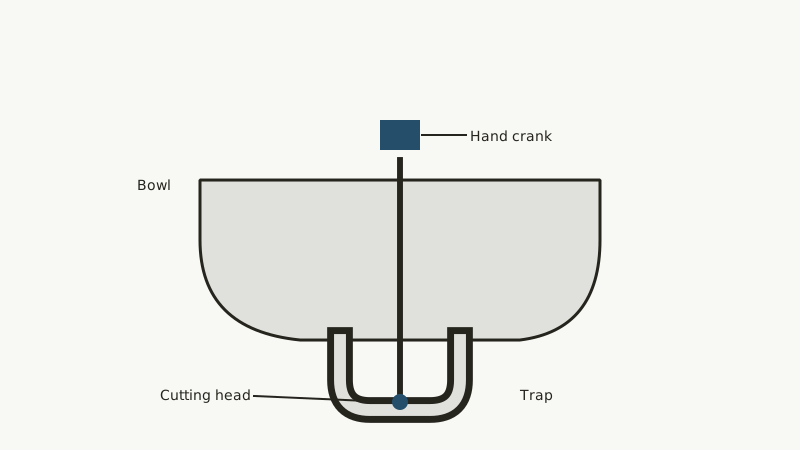
A toilet blocks when more goes down the trap than the drain can carry away. If the bowl is filling right now, stop flushing and read the first section, because a second flush is how a clog becomes a floor full of water. Most blockages are local and clear with a plunger. This page follows the same steps a plumber would, and the clogged toilet service page covers when to call for help.
Water is climbing toward the rim. What is the first move?
Hands off the handle. Lift the tank lid and push the flapper closed, or turn the stop valve behind the bowl clockwise, so the tank stops feeding the bowl. Lay towels around the base, crack a window, and collect a plunger, gloves and a bucket. A minute spent here can spare you a full floor cleanup.
If the water is near the rim, wait a few minutes, since it often drops by itself as the clog loosens. Bail some out with a cup into the bucket if you must. Of the two controls, the stop valve is the safer one, so confirm that it turns. If yours is frozen, fixing a toilet stop valve explains the options.
How should the plunger be used?
Pick a toilet plunger, the kind with a tapered cup shaped for the bowl outlet, and make sure the cup is submerged. Seat it over the hole, press down gently once to release trapped air, then pump in a steady rhythm without breaking the seal. Water in the pipe makes a plunger far more effective than air.
The reason, per Wikipedia's plunger entry, is that water does not compress, so each stroke delivers its force to the blockage. Hold the rim against the outlet, lean on it, and finish with a sharp pull so suction helps dislodge the clog. A gurgle followed by a draining bowl means success. Test with a single flush, lid up, rather than two. A level that refuses to drop after several rounds calls for the next tool.
Plunging failed. Is the closet auger next?
Yes, and it is the right tool. A closet auger is a hand-cranked snake, short and bent at the end, built for toilets. Guide the tip into the outlet, turn the handle clockwise with light forward pressure, and retract once it catches something or breaks through. Wikipedia's drain cleaner entry notes that ordinary handheld augers can scratch porcelain, which is why a closet auger is the advised choice here.
Gloves and safety glasses go on first, and the tools get cleaned well away from the kitchen. When the auger hooks something solid, say a toy, a cap or a clump of wipes, draw it out and do not shove harder. Free movement with a still-sluggish bowl suggests the obstruction sits farther along the line. If the drain is clear but the flush is weak, the cause is in the tank, and toilet flush repair covers that.
Are chemical cleaners, hot water or dish soap worth trying?
Leave the chemical bottle on the shelf. Commercial openers are corrosive acids or alkalis, and Wikipedia says heavy use can harm pipes. In a bowl the liquid just sits, and it can splash onto you at the next plunge or onto whoever comes to help later. Never combine cleaners, bleach included. Enzyme products are gentler but slow.
Dish soap followed by warm water, poured from about belt height, can loosen a soft clog. Use water no hotter than the tap delivers rather than boiling, because a sudden jolt of heat can crack porcelain. Give it fifteen minutes before another plunge. Paper yields to patience. A solid object never will, and for that the auger or a pro is the answer.
Is it only the toilet, or is the sewer line involved?
A single blocked toilet means the clog is in that fixture or the short pipe it feeds. Gurgling or slow drains in several fixtures at once, or an overflow from the lowest drain in the building, put the trouble farther along the line toward the street. In Long Beach, the sewer lateral on private property is the owner's responsibility.
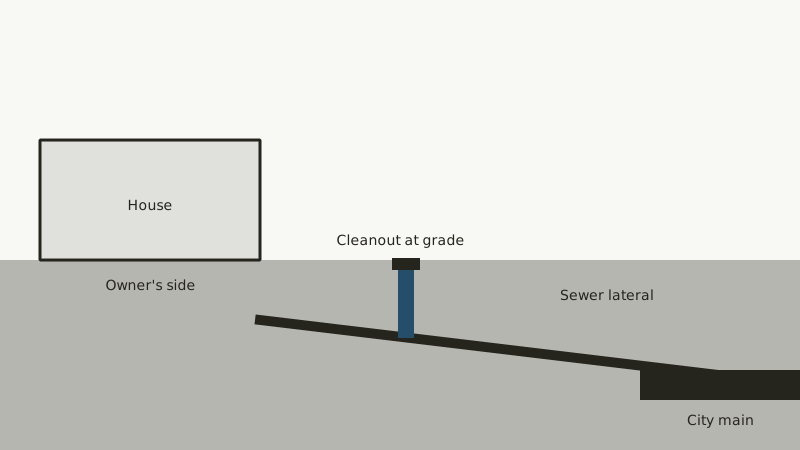
For a suspected main-line problem, the city's steps are an initial inspection, then clearing and draining the lateral (ideally by a professional), plus a proper cleanout if the property lacks one. Sewer emergencies and overflows go to Long Beach Utilities at (562) 570-2390, and a street manhole spilling over, or a backup shared with the neighbors, belongs on that call too. A camera or drain machine reveals where the blockage lives.
Is there a safety risk when clearing a sewer line in Long Beach?
Yes, a rare one that is worth knowing. Long Beach Utilities describes cross bores, spots where a gas line was bored straight through a sewer line, and warns that a root cutter can slice the gas pipe. Its warning signs are bubbles in standing water or in a toilet bowl, a hiss or roar at a cleanout or vent or inside the building, and the smell of gas.
Any of those means walking outside and phoning from there. Long Beach and Signal Hill gas customers reach Long Beach Energy Resources on (562) 570-2140; Lakewood, Seal Beach and other neighbors use SoCalGas, 1-800-427-2200. If anyone feels unwell, 911 is the third call. Given the risk, the city wants an inspection before a lateral is cleared mechanically. Hydro jetting, which clears a lateral with high-pressure water, is worth raising with the plumber as well.
What makes the same toilet clog again and again?
Usual suspects: heaps of toilet paper, wipes labeled flushable, objects that never belonged, and a drain line narrowed by roots, scale or a sag. Wikipedia's drain entry names wet wipes, excess paper and fats as typical causes of blockages. Low-flow toilets depend on a clean trap and an open line.
In older neighborhoods like Belmont Shore, Bixby Knolls and Naples, the lateral to the street can be decades old, so clogs that return every few months often implicate the line rather than the bowl. Toilets today are limited to 1.6 gallons a flush, with WaterSense models at 1.28 according to the EPA, which leaves little water to push a partial blockage along. Wipes, paper towels, feminine products and dental floss should stay out, whatever the label claims.
What does it cost if I call someone?
October 2026 national data from Thumbtack shows a simple clog fix at roughly $100-$250, and a serious blockage up to about $400. Extras such as an auger or a camera inspection add to that. These are guide numbers, and the real quote follows a visit. A price breakdown is in what unclogging a toilet costs.
Expect more for a main-line clog, a toilet unbolted from the floor to recover something dropped in it, an after-hours call, or a lateral that needs a cleanout added. A plumber should tell you the likely method before work starts: hand tools, a drain machine, jetting or a camera. For slow drains in other fixtures, see why a sink drains slowly and clearing a shower drain.
Common questions
Will a blocked toilet ever clear by itself?
Sometimes. A soft paper clog can loosen and move on after an hour or two without flushing. A solid object will not. Resist flushing to test, since that adds water to a bowl that may already be full. Plunge once the level settles, and bring out the auger if the water barely moves.
Is it fine to use water elsewhere in the house?
With a single blocked toilet, yes. When several fixtures are slow or gurgling, hold back on showers and the washer, as the water has no exit and may rise through the lowest drain. That pattern points to the main line, so phone a plumber or the city, depending on where the blockage turns out to be.
Are flushable wipes really flushable?
Not in any way that helps your pipes. Wikipedia lists wet wipes among common blockage causes. Many hold together instead of breaking apart like paper, and they snag on roots or rough pipe wall. Wipes go in the trash; only toilet paper and human waste belong in the bowl.
Where do I ask for help with a stubborn clog?
Our quote page is the place to name the affected fixtures, what you tried and whether water is on the floor. Requests arrive weekdays, 9am to 5pm, and any price is put in writing after a visit. The Harbor Lights home page covers our other trades.
References
Updated