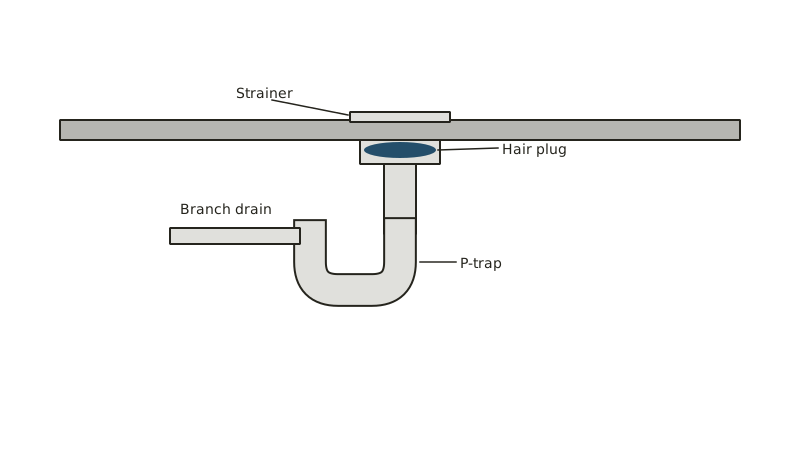
Standing in gray water while the shower runs tends to trace back to hair glued together with soap residue, wedged just beneath the strainer, and a plastic hair-catcher strip often pulls it right out. Below, the home fixes come in the order I would try them, with the point where each one stops being sensible. A drain that keeps slowing again is a case for professional drain clearing.
First step when the shower floods my ankles?
Pop off the strainer and look. Most of the time a dark tangle sits within reach of a barbed plastic strip, a straightened wire hanger or long tweezers, and the pool drops as soon as you lift it out. Park a trash bag beside the tub first, because the stuff is not pleasant.
Strainers are held by a screw or just press in. Tub stoppers vary: a lever type can need its linkage unscrewed, and a pop-up type twists free. After the plug is out, let hot tap water run for a minute. A normal rate of drainage ends the job. A weak trickle sends you on to the plunger.
Will a plunger really move a tub or shower clog?
It will, provided you stop the air escaping through the overflow slot. Press a damp rag over that slot, add enough water to cover the drain by a couple of fingers, set a cup plunger flat against it and pump hard about a dozen strokes. Lift off sharply at the end and see if the level falls.
Flanged plungers are built for toilets, so leave them in the other bathroom. A few rounds may be required before the plug breaks loose.
Take it easy on a one-piece fiberglass shower pan. A drain body that is cracked or loose can leak under the floor after rough pumping, and repairing rotted subfloor is a bigger bill than a sluggish drain ever was.
Can hot water, baking soda or a drain snake do the job without chemicals?
A hand snake or plastic barbed strip beats everything else, because hair has to be pulled out. Dish soap in hot water softens the greasy film. The baking soda and vinegar combination foams, but it barely touches matted hair, which makes it monthly maintenance, not a remedy.
My suggested sequence:
- Lift the visible hair by hand.
- Flush with the hottest water the tap gives. Skip the kettle: a rolling boil can loosen PVC joints and crack porcelain.
- Plunge with the overflow covered.
- Feed a compact hand auger down the opening, turning the handle while it advances, then withdraw it slowly.
- Rinse with warm water for two or three minutes.
A wet-dry shop vacuum set to suck, with its hose pressed hard over the drain, will also pull up a loose plug. Plenty of do-it-yourselfers try that before they buy a snake.
Are store-bought drain openers worth the risk?
Usually not. The EPA lists lye and sulfuric acid as the working ingredients in many, and warns about skin burns, eye injury and harm if swallowed. If the product sits on top of a stubborn plug, the next person to plunge may get splashed with it.
When you do use one anyway, put on rubber gloves and eye protection, switch on the exhaust fan and read the label. Do not blend two products, and never add bleach or acid toilet cleaner afterward: Poison Control explains that bleach mixed with acids or ammonia gives off dangerous gas. Mention the product to whoever comes out, so the person running the cable knows what is in the line.
Poison Control takes calls at 1-800-222-1222, day or night.
What if the water just sits there after all that?
Ladle the water into a bucket so it does not stagnate, then try a longer hand auger of three to six feet through the opening. When it still sits, the obstruction is beyond reach or the trap and branch pipe are lined with buildup.
Look around the house for clues. Water you bailed that returns, or a nearby sink that gurgles when the tub empties, suggests the blockage sits on a branch other fixtures share, or on the main drain itself, and working harder at the shower trap will not cure it. Adding water at that stage only pushes the level toward an overflow onto a ceiling below.
Leave the rented power auger alone unless you know what lies behind the fixture. A kinked cable can score a plastic or cast-iron pipe, swapping a clog for a leak.
And the bathroom sink, laundry standpipe, disposal, roof vent or AC line?
These fail differently. A bathroom sink plugs just under the stopper, where hair and toothpaste snag on the pivot rod, and a bottle brush or barbed strip pulls it clear. Laundry standpipes fill with lint and want a snake. A disposal that hums but never drains is covered on the garbage disposal repair page.
Gurgling or sluggish flow across many fixtures can mean the vent stack on the roof is partly blocked by leaves or a nest. That means a ladder and a hose on a slope, which is better left to a pro.
Air-conditioner condensate lines collect algae. Owners often clear the outside end with a wet-dry vacuum, but anything in an attic or on a roof should go to whoever services the equipment.
Why does hair keep rebuilding the same clog?
Hair never dissolves. It wraps rough pipe walls, catches soap film and narrows the bore a little more each week. The cheap cure is a mesh basket in the drain that you empty after each shower, plus a hot rinse once a month.
Local water chemistry plays a part. According to Long Beach Utilities' 2025 report, hardness runs about 66 to 100 parts per million in the blended zone and 100 to 300 where imported water is delivered, so minerals combine with soap into a stickier crust than hair would form alone. Bungalows from the 1920s and 1930s may also have rough-walled iron or galvanized branches that snag more strands than smooth plastic.
What are the signs a plumber needs to take over?
Slow flow at several fixtures, a plug that returns within days, a sewage smell, or water surfacing in the lowest floor drain all point past the shower trap to a branch or the main line, territory for a machine cable or camera.
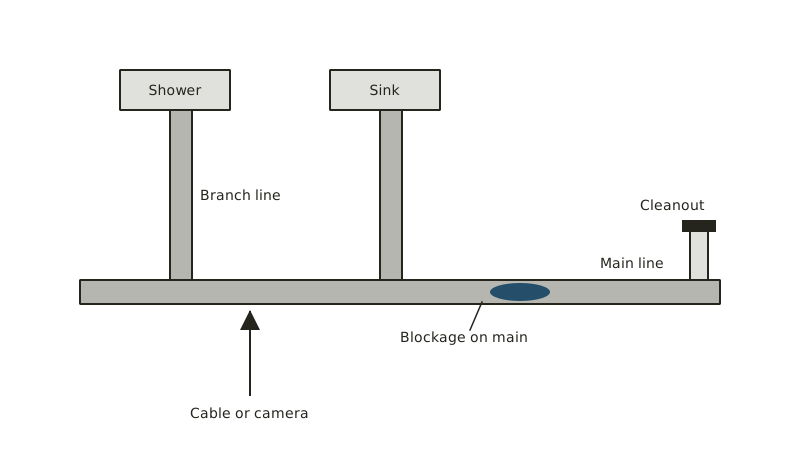
A rotary cable and hydro jetting reach much farther than a hand snake, and a camera reveals roots, a sag or a cracked joint. For the odor side of a backed-up line, read about chasing a sewer smell. Prices are laid out on the unclogging cost page, and a visit set up through the quote form comes with a written price first.
Long Beach does require a plumbing permit when drain piping is installed, altered or replaced, while a stopped leak or minor fix without new material is exempt. Snaking a clog needs nothing. Pipe replacement is contractor work. Above $1,000 in labor and materials the state expects a contractor license, and the board's website shows whether a given number is current.
Common questions
Does baking soda clean a drain?
Alone, barely. Mixed with vinegar it foams, and that may lift a little soap residue, which suits routine upkeep. A hair plug or a lodged object will not dissolve in it. Pulling the hair out, or running a snake through, is what gets water moving again.
What is the way to clear a badly blocked toilet?
Fill the bowl enough to cover the rubber, then use a flange plunger, pushing gently at first and pumping steadily after. Next comes a closet auger. When nothing shifts after a handful of rounds, the stoppage is farther along. Steps are laid out in our blocked toilet guide.
How much of my afternoon will a home fix eat?
Pulling a hair plug by hand is about ten minutes. Plunger and snake rounds with cleanup might run twenty to forty. If an hour passes and the water has not budged, put the tools away and ask for a visit, since a deeper clog needs a machine.
What questions belong in a hiring conversation for drain work?
Start with the license number, which anyone can search online. Then clarify whether the price covers the first cable pass or runs by the foot, whether a camera inspection is offered, and what changes if the blockage lies beyond the first cleanout.
The rest of our guides start from plumber across Long Beach.
References
- U.S. Environmental Protection Agency, household hazards handout (drain cleaner ingredients and burns)
- Poison Control, chlorine gas facts (mixing cleaners)
- Long Beach Utilities, 2025 Annual Water Quality Report
- City of Long Beach, plumbing permit requirements
- California Contractors State License Board, hiring a contractor
Updated