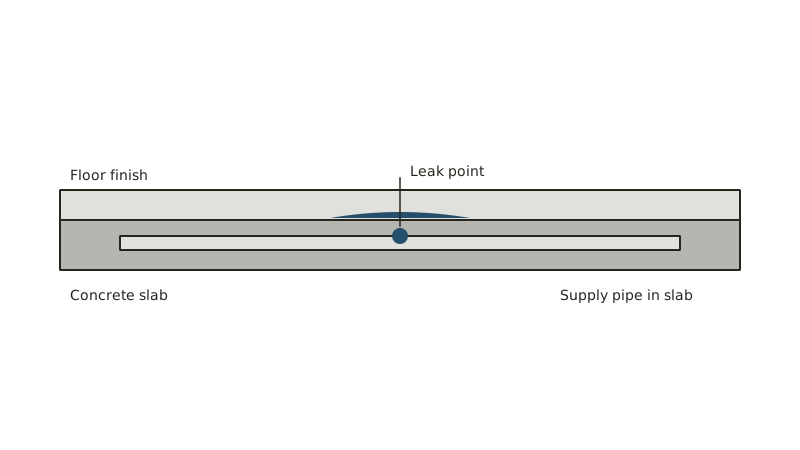
A slab leak means a pipe has let go inside or underneath a concrete floor, out of sight. Payment hinges on what failed, how quickly, and what your particular policy says, and I have no view of that. What I can show is how the standard form and the state insurance department treat water damage. For the wider picture of finding and fixing leaks, see our leak plumbing page.
Will a standard homeowners policy pay for a slab leak?
It may pay for the water damage the leak causes, but usually not for the broken pipe, and often not for a leak that built up slowly. In its homeowners guide, the state insurance department places sudden and accidental water damage on the usually-covered side. Against it, the guide lists water damage from seepage, plus wear, poor maintenance and neglect.
It also warns readers to study the exclusions section of their own contract. Insurers and forms vary, so the real answer lives in your declarations page and policy wording, and in a conversation with your agent.
A sudden event is the easiest case: a line under the slab splits, floors and baseboards get wet, and you find it within days. A pinhole that has dripped for months, found when the floor feels warm or the bill climbs, is the harder case, because the insurer may call it long-term seepage or deterioration.
What does the policy language typically say about the pipe and the floor?
A widely used sample homeowners form, the Insurance Services Office HO 00 03, covers accidental discharge or overflow of water from a plumbing system, but not the loss to the system itself from which the water escaped. It adds tear-out and replacement of part of the building, but only when necessary to repair the plumbing.
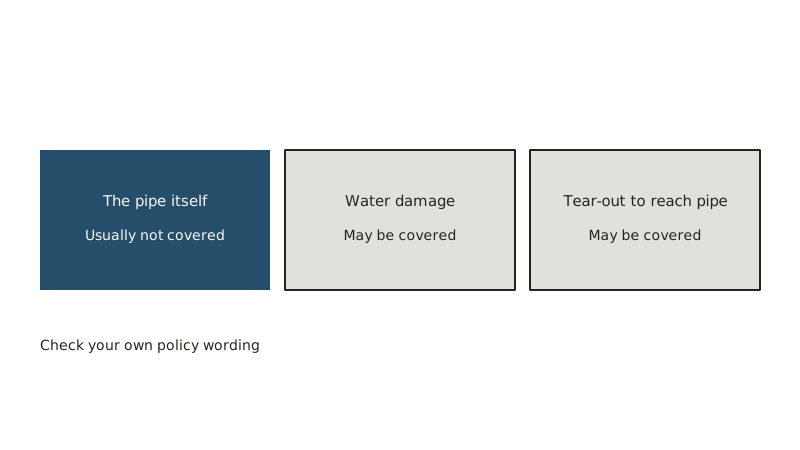
Read that carefully. It suggests the pipe is yours to repair, while some of the cost of opening a wall or floor to reach it may be covered, depending on the form. The same sample form excludes wear and tear, deterioration, rust and other corrosion, and settling or cracking. Copper under a slab often fails from corrosion, which is why a claim can hinge on cause.
Insurers sell many variations, and a California policy may differ from this sample, so treat the form as an illustration. Scan for sections on water damage, accidental discharge and exclusions, then email your agent asking how a slab leak would be treated.
What does it cost, and how do I find the leak first?
Pipe repair is priced separately from the damage. For plumbing prices go to what slab leak repair costs; and tracing a hidden leak is priced under leak detection costs. Whatever the insurer decides, the plumber's written findings, photos and invoice are what a claim file needs.
Clues pointing under the floor: the sound of flow with nothing in use, a patch of flooring that feels warm, damp carpet or tile, a musty odor, a bill that suddenly jumps. A meter test confirms it. Close every tap, note the dial, return two hours later and compare: if the dial has moved, water is going somewhere. EPA puts typical household leak loss at 9,300-plus gallons yearly, so a hidden one adds up.
What should I do first, before I call the insurer or a plumber?
Shut off the water, protect belongings, and record everything. Close the main valve, lift furniture and rugs off wet floors, shoot photos and video before cleanup starts, and save every receipt. State insurance guidance tells owners to halt the leak at its source and dry affected areas fast to hold mold back, and says insurers usually refund reasonable temporary-protection costs backed by receipts.
Notify the insurer without delay. The state's claims guide urges immediate reporting of water damage and cautions that further damage might be left uncovered when the owner did not take sensible protective steps. Do not throw away damaged materials until the insurer has had the chance to look, unless safety demands it.
Then arrange a plumber to find and confirm the source. Ask for a written report that names the pipe, the location and the likely cause, since cause is what the insurer will ask about. When requesting a visit through the quote form, mention an upcoming claim, so the paperwork comes out in a form the insurer can use.
What if the claim is denied or only partly paid?
Ask for the decision in writing with the policy provisions it relies on, and compare them with your policy. Keep disputes in writing, addressed to the insurer, agent or broker. The state insurance department issues a Residential Property Claims Guide and runs a consumer hotline, both worth using if you believe the denial is mistaken.
Even when the claim is denied, repair choices remain. Choosing among a spot fix, rerouted lines and a full repipe is the subject of slab leak repair or repiping, and slab leak repair companies lists what to ask a contractor. Water that reached walls or insulation can lead to mold, and the state's guide says a covered cause can bring mold under coverage as well, so raise it.
Related pages cover burst pipe coverage and pipes under the foundation.
This page is general information, not legal or insurance advice. Your policy and your insurer decide your claim.
Common questions
Does insurance pay to break the slab?
Possibly, but only in part. The sample homeowners form covers tear-out and replacement of part of the building when that is necessary to repair the plumbing, though it does not pay for the pipe itself. Sub-limits are common. How your policy handles reaching a line below the floor is a question for the insurer.
Is a slow slab leak treated differently from a sudden one?
Often. The state's homeowners guide puts seepage, leaks and wear and tear among usual exclusions and sudden, accidental water damage among usual coverages. A drip that went unnoticed for months may be refused as long-term seepage. Quick action and documentation help show when you first learned of it.
Should I report the leak even if I am unsure it is covered?
Report it promptly and let the insurer decide. The state advises reporting water damage claims right away. Waiting can hurt you if the policy requires prompt notice or if further damage follows. Be factual, keep receipts for emergency repairs, and ask what the insurer needs from the plumber.
Who can repair a slab leak in Long Beach?
For jobs reaching $1,000 including materials, California expects a contractor license, and the state board's website will confirm a number. Long Beach also issues a plumbing permit when piping is replaced. A plumber who offers to skip paperwork is a warning sign, and your insurer may ask for it too.
For the wider picture, start with the plumber guide for Long Beach.
References
- California Department of Insurance, Residential Insurance: Homeowners and Renters
- California Department of Insurance, Residential Property Claims Guide
- Insurance Services Office, sample homeowners policy form HO 00 03 10 00 (published by Triple-I)
- NAIC, will my homeowners policy cover water damage from a burst pipe
- U.S. EPA WaterSense, Fix a Leak Week
Updated