Nobody shops for slab leak repair companies on a quiet Sunday. The search starts after a water bill leaps, a stretch of floor turns warm underfoot, or the meter keeps spinning with every faucet closed. Before you phone anyone, turn the main off and photograph the meter dial. After that, use this page to untangle who does what, what repairs are on the menu, and which questions guard your wallet. For leaks in general, the plumber for leaks page is the wider overview.
Do I call a plumber, a leak detection outfit, or both?
Some companies do only detection, some do only plumbing, and plenty do both under one roof. A detection outfit pinpoints the break with listening gear and thermal cameras. A plumbing contractor with the state's C-36 classification can find and fix it. The practical question is who finds it, who digs, and who files the permit.
The C-36 definition reaches the water pipe between the customer-side meter connection and the building, which is where floor breaks happen. A detection specialist can still be a smart first call if the leak is hard to find, though you should ask what happens after the finding. Price context for that step sits in our note on leak detection pricing.
What should the company prove before anyone touches the concrete?
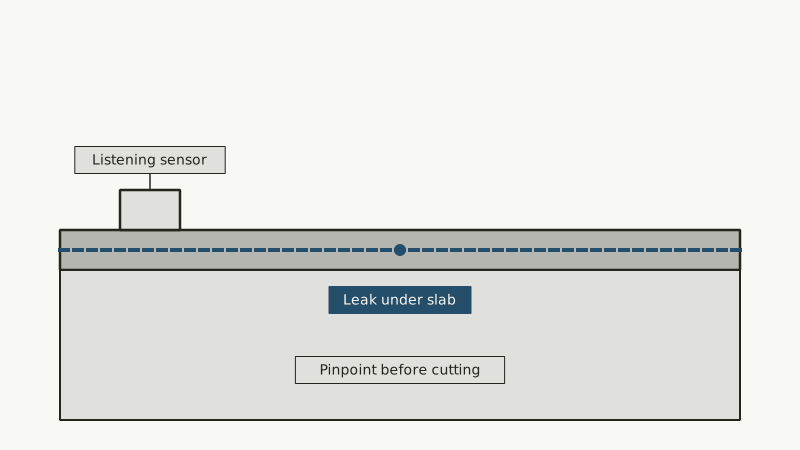
Proof of location. Acoustic gear hears water escaping, a thermal camera spots a hot line that is leaking, and a pressure test shows which loop has failed. The crew should mark the spot on your floor and walk you through the evidence. If the explanation sounds like a hunch, that is your cue to keep shopping.
Then ask why they chose their repair. A company that jumps to the costliest option without weighing others owes you reasons. Route matters: a patch under tile is a smaller mess than new lines through the attic. And ask who moves your furniture and who restores the flooring, because floor finishes are frequently billed apart.
Which repair methods should come up in the quote?
Expect four. Spot repair: open the slab above the break and swap that section. Reroute: leave the dead line in the concrete and thread fresh pipe above the ceiling or inside walls. Lining: coat the interior of old pipe with epoxy, leaving the floor intact. Repipe: replace the whole supply network when failure is widespread.
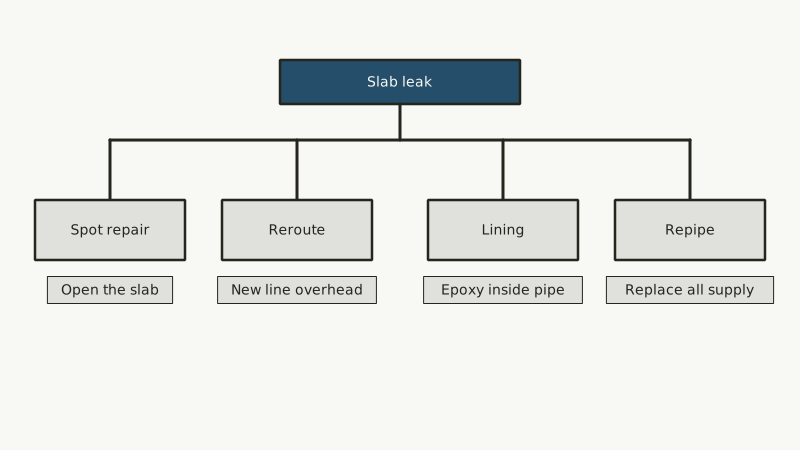
A solitary pinhole in pipe that is otherwise healthy suits a spot repair or reroute. Leaks popping up in several places, or pipe that is corroded throughout, tilt toward repiping, a trade-off laid out in repair versus repipe for slabs. Lining does not work on every pipe, so get the company's reasoning in writing.
What do these companies charge, according to published guides?
Spreads are wide. One national 2026 guide shows an average near $2,280 with detection included. Detection alone commonly lands at $150 to $400, higher in some listings. Spot jobs run about $500 to $4,000. Reroutes appear anywhere from $600 to $8,000, and lining from roughly $1,000 to $8,000 depending on the source.
With ranges like that, a bare total tells you little. Insist on quotes written after the leak is located, each one stating method, floor restoration, permit and what a second leak would cost. For line items, see what slab leak work costs; only a quote after a visit is real.
How can I check out a firm before signing anything?
Run the contractor's license number through the board's online lookup and compare its classification with the job. Jobs above $500 need a written contract, and an advance cannot top $1,000 and cannot top ten percent of the price, so the lower cap governs. Long Beach requires a permit when piping is replaced, so a contractor who says none is needed deserves a second question.
Red flags: a phone quote with no inspection, a push to sign today, no written scope, nothing said about patching. A sound quote names the method, the spot, the materials and the exclusions. Describing the job on our quote page sets a local plumber's follow-up in motion.
What can I safely do while waiting for the visit?
Close the main. A line leaking under concrete keeps running, and a floor can soak through quickly. No handle in sight? Many meter boxes have a shutoff of their own. Lift rugs and anything valuable off damp areas, and stay away from wet outlets. Touch the breaker panel only when the floor around it is dry.
Dry fabric and drywall fast, since damp materials grow mold. Long Beach Utilities can be reached on its main line, (562) 570-2300, about leaks on its side of the meter; its responsibility ends at the meter, and everything beyond is yours.
Is my house on a slab at all, and will insurance cover it?
Lakewood's postwar tract homes are often slab construction, while older bungalows near the harbor more often have crawl spaces, where a leak can sometimes be reached from underneath. A plumber or your permit history can tell you which you own, and the answer changes your repair options.
Coverage tends to attach to sudden, accidental water release and the damage it does, and may not pay for the pipe itself or for a slow seep. The wording is yours to read. Keep photos, invoices and the plumber's written finding, and see slab leak insurance coverage. Copper that pinholes is a common cause; pinhole leaks in copper are covered separately.
Common questions
What is the likely schedule?
Finding the leak is generally quick. Per published guides: spot repair, one or two days including the patch; reroute, several; repipe, two to five. Flooring work trails behind. Curing and the permit inspection add calendar days, so request the schedule on paper before you agree.
What belongs on my checklist for the first call?
Ask how the leak gets located, what repair is proposed and why, whether flooring is in the figure, who takes out the permit, and what happens should that first fix fail. Request the license number and a copy of the contract before paying a cent. Collect two written quotes sharing one scope.
Can a slab leak hurt the foundation?
Over a long stretch, escaping water can soften the soil beneath a slab. That is why speed matters, and why waiting for cracks is a poor plan. A plumber's written note on where the break was and how long it has likely run helps any insurance claim. If you see movement, a structural engineer is the next call.
Does it count as an emergency?
Urgent without being frantic. Close the main, then phone during working hours. Should water creep toward an electrical panel, leave that area alone and let the plumber or an electrician advise. A gas smell belongs in a separate category: leave the building and phone the gas utility from outdoors.
This guide is one of many on plumber long beach.
References
- CSLB, C-36 Plumbing Contractor classification
- California Contractors State License Board, home improvement contracts
- City of Long Beach, plumbing permit requirements
- Long Beach Utilities, high water bills (leak checks and responsibility)
- U.S. EPA, Fix a Leak Week
- NAIC, will my homeowners policy cover water damage from a burst pipe
- Published slab leak detection and repair cost guides, checked November 2026
Updated