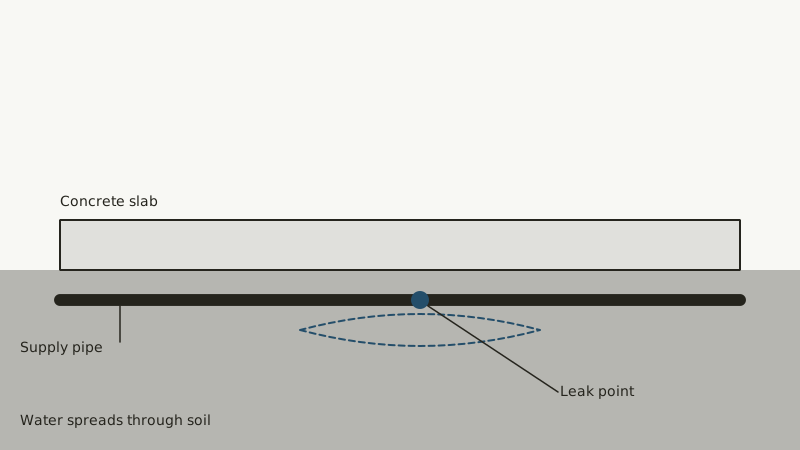
Reading your policy is beyond a plumbing service, and no web page can do it for you. What we can do is lay out how California's insurance department describes water damage, how a pipe failure under a Long Beach slab usually plays out in a claim, and what to get in hand before anyone calls the adjuster. When you need the pipe itself dealt with, start from our home page and describe the problem.
The short version: homeowners policies are built around sudden and accidental events. A pipe that splits and floods the house fits that model. A pipe that has been seeping for months, or a failure blamed on age and corrosion, often does not.
Does a standard homeowners policy pay for a pipe that broke under the slab?
It can pay for the damage that follows but often not for the pipe. The state insurance regulator lists water damage that strikes suddenly and by accident among covered perils, and lists seepage and long-running leaks among the perils generally left out. Reaching a buried pipe may or may not be paid for, depending on your wording.
In practice, insurers often separate three things: the damage the water caused to floors, walls and belongings, the cost to find and open up the leak, and the bill for the pipe repair. A policy might pay the first, partly pay the second and exclude the third as a maintenance item. Foundation damage tied to soil movement or settling is often treated differently again. Read your policy's definitions and exclusions, and ask the insurer in writing which part of the loss is covered.
What do sudden and gradual mean for an underground leak?
Sudden means a break that happened at an identifiable time and released water quickly. Gradual means seepage, dripping or corrosion over weeks or months. Slab leaks are hard to classify because nobody sees them start. Evidence of timing matters: a water bill history, meter readings and the plumber's findings.
A plumber can describe what turned up: a split line, a pinhole in corroded copper, a joint that failed. The adjuster makes the coverage call, and a plumber should not tell you whether the claim will be paid. What helps is a clear written report with photos and the location of the leak. Long Beach homes built in the postwar era on slabs, such as many in Lakewood, run supply lines through or under concrete, so the question comes up regularly.
What comes before the call to my insurer?
Shut off the water, then keep the damage from growing. The state insurance department cautions that more damage can go unpaid if you skip reasonable steps to secure the property, and that delay can bring mold. Take photographs, keep receipts for temporary repairs, and report the loss promptly.
Gas first, if it is involved. Detect gas and you leave the house first. Once you are outside, report it to your gas utility (Long Beach Energy Resources, (562) 570-2140, in Long Beach and Signal Hill; SoCalGas, 1-800-427-2200, in most neighboring cities); 911 is for anything dangerous. Once water is off, ask the plumber what repairs are needed now and what can wait for the adjuster. Be ready with your policy number, the date you noticed the problem, and a list of damaged items. Keep ruined materials for the adjuster to see, unless a health hazard forces you to dispose of them.
Also note the claims phone line the department lists on its guides, 800-927-4357, for questions about how claims should be handled.
What will an adjuster want to see?
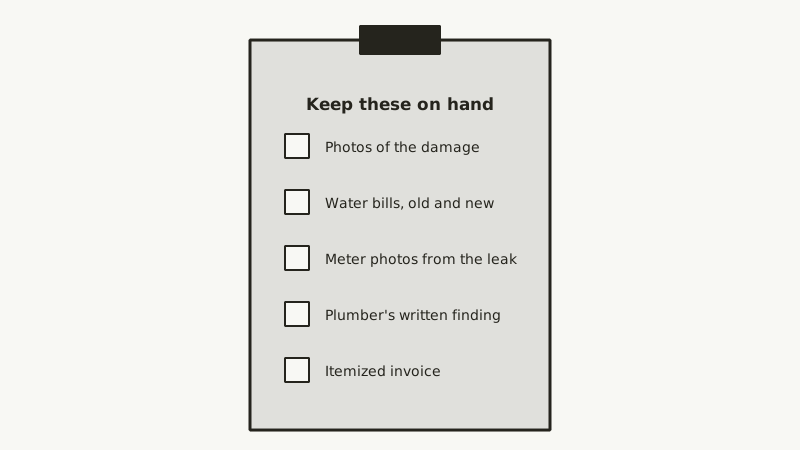
Expect questions about when you first noticed signs, what you did about them, and proof of the cause. Useful records are water bills before and after, meter photos, the plumber's invoice or report, photos of every damaged area, and receipts for drying, hotel stays or storage. Keep a log with dates of every call.
If the leak was found with equipment, a leak detection report is valuable evidence. Our page on leak detection pricing explains what that visit involves. Mold complicates things: EPA points to professional cleanup once mold grows beyond roughly 10 square feet or follows contaminated water, and your policy may handle mold separately. For policies that offer additional living expenses, the department's guides describe that coverage for time you cannot live in the home after an insured loss.
How do I repair a confirmed slab leak?
The plumber can break through the slab and repair the line, reroute the pipe through walls or attic so the concrete stays intact, or replace the whole system. Which path makes sense depends on the pipe's condition and the number of failures. Prices, permits and disruption differ a lot, so compare quotes with the same scope.
The trade-offs sit in fixing the slab versus repiping and the ranges in slab leak repair cost. Most plumbing work requires a contractor license here, verifiable on the state board's site, and Long Beach requires a permit for work beyond minor repairs without new materials. San Pedro and Wilmington use LADBS. Related claim questions are handled in slab leak coverage and burst pipe coverage.
Common questions
How soon will this be resolved?
It varies. Finding the leak can take a day, repairs one to several days, and a claim can run weeks depending on the insurer and the damage. Do not delay stopping water or documenting the loss while you wait for answers. The plumber can estimate the repair itself after locating the leak.
What paperwork should the plumber give me for a claim?
Ask for a written report that says what was found, where, and the likely cause, along with photos and an itemized invoice. Ask whether the quote separates leak location, access and repair, since insurers may treat those differently. Verify the contractor license with the state board, and keep every document together.
Should I be present for the adjuster and the plumber?
Ideally yes, or someone you trust, since both need access, and someone has to answer questions about when the problem started. Show them the meter, the damaged areas and any earlier repairs. Cannot attend? Tell the insurer and the plumber, and arrange access in advance.
References
Updated