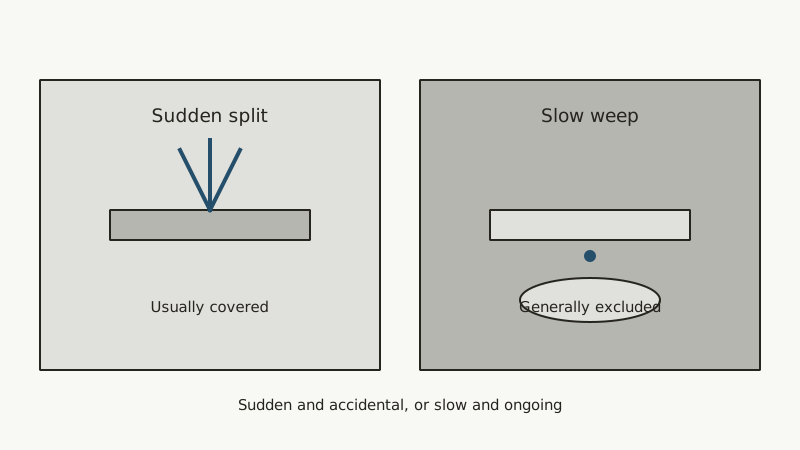
Frequently yes for the water damage, frequently no for the pipe itself. California's insurance department says standard homeowners policies list sudden, accidental water damage as covered, and generally exclude seepage, slow leaks, mold from neglect, and wear and tear. This is general information and not advice on your policy, so your own wording and your insurer decide. A leak help page covers the plumbing side.
Does a homeowners policy respond to a burst pipe claim?
Usually the sudden damage is, thanks to the "sudden and accidental" water peril found in a standard policy. A burst pipe that floods a room fits that wording. Many policies cover the resulting damage to floors, walls and belongings, but not the cost of repairing the failed pipe. Flood from outside, as with rising water, is a separate matter not covered by homeowners policies.
The California Department of Insurance offers an example with a water heater. If the tank bursts and ruins a wall, the manufacturer's warranty may repair or replace the heater, while the homeowners policy pays to fix the wall and floor. The same logic applies to supply lines: the damage can be covered while the part that failed is yours to replace.
Policies differ, and deductibles apply. The only reliable answer comes from reading your declarations page and the water damage section, or asking your insurer or agent in writing.
What is usually not covered?
Gradual leaks, seepage, repeated dripping, rot, mold from long-term moisture, and damage tied to wear, deterioration or poor maintenance are generally excluded. Insurers treat a pipe that has been weeping for months differently from one that split overnight. Flooding from outside the home also falls outside a standard homeowners policy.
The state's guide lists these as typically not covered: water damage from seepage or leaks, mold, and wear and tear or maintenance problems. Mold that follows a covered event may be covered too, so how it began matters. This is why timing and records matter so much: a plumber's findings can show whether a failure was sudden or long running.
One gap worth knowing about: the California FAIR Plan's basic fire policy does not include accidental discharge or overflow of water, and a court upheld the Insurance Commissioner's power to order that coverage added. People with a FAIR Plan policy should ask whether they hold a separate policy that covers water damage.
What are the first steps once a pipe has burst?
Close the main valve right away, kill power to wet areas only if reaching the panel is dry and safe, and limit the spread. Photograph everything, carry belongings away from the water, and tell your insurer soon after. A policy may refuse follow-on damage when the owner never took sensible steps to protect the property.
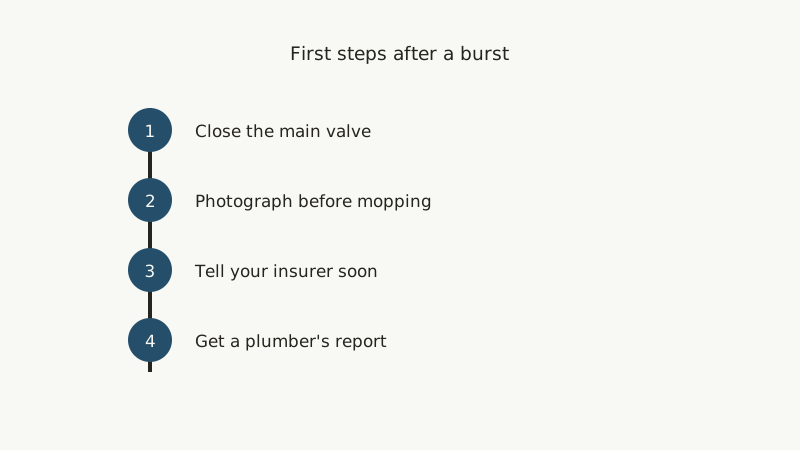
A quick sequence:
- Close the main. Locate it ahead of time. Older Long Beach houses often keep it near the meter box or on the wall facing the street.
- Stay away from electricity. Do not touch outlets, panels or fixtures standing in water. If the water is near live wiring, leave and call for help.
- Record it. Shoot photos and video before moving anything, and jot down when it happened.
- Contact your insurer or agent. Ask what they need and whether they want an adjuster to see damage before cleanup.
- Dry things out. State guidance urges quick drying, since a slow cleanup lets mold grow.
- Book the plumber. Keep any damaged pipe section if the plumber says it is useful as evidence.
Our phone line answers on weekdays in office hours. Outside those hours, the shutoff and photo steps above come first, and the call follows on the next business day. The emergency burst pipe page covers the plumbing steps in more detail.
How does a plumber's report help with a claim?
A written plumber's report records what failed, where, and likely why: freeze or pressure, a corroded fitting, a joint that let go, or a long-running pinhole leak. It supports the sudden-versus-gradual question and itemizes the repair cost. Insurers decide coverage, but clear documentation speeds the conversation.
Have the plumber put in writing:
- Where the failed pipe or fitting was, and what kind it was.
- Pipe age and material, for example galvanized steel, copper or polybutylene.
- Signs of long-term corrosion or sudden failure.
- The repair done, with parts and labor listed.
- Any recommendation for further work, such as replacing the whole run.
Pinpointing the source matters when it hides in framing or concrete, since exact location limits how much finish gets opened. The leak detection pricing guide explains what that service costs. Your water bill is another clue: the EPA says leaks in a typical home waste more than 9,300 gallons annually, so any unexplained rise in use deserves a look.
When does a burst pipe become a bigger job than a repair?
When the same system keeps failing. One burst on an old galvanized or polybutylene line usually means more bursts to come, and insurers may question damage that follows ignored warning signs. Replacing the failing run can cost less than the next claim and its deductible. The repipe overview explains when whole-house replacement makes sense.
Burst pipes in Long Beach are less often about freezing and more about pressure, corrosion and age. Near the harbor, many houses built between the world wars and just after still hold mixed old pipe, and salt air can speed corrosion on exposed fittings. Preventive checks matter more than most people think, and the burst pipe prevention guide lists them.
For help arranging a repair, use the quote form. The Harbor Lights Plumbing front page outlines our other services.
Common questions
Is the burst pipe itself reimbursed?
Frequently not. Many policies pay for what the water ruined but regard the failed pipe as wear or upkeep, which leaves that repair to you. Some policies add endorsements that change this. Read the water damage section of your policy and put your question to the agent in writing.
Is mold from a burst pipe covered?
It can be, if it follows a covered event like a sudden burst and you dry things promptly. According to the state insurance department, mold from a covered peril may be covered, whereas mold from long-term moisture generally is not. Drying fast and keeping records are the best protection.
Do I have to report a small burst pipe claim?
Check your policy and ask the agent before deciding. Some owners pay small repairs themselves to avoid a claim on their record, and others find a claim worthwhile once drying and rebuilding costs are clear. Whatever you choose, document everything and fix the cause right away.
Does a plumber decide whether my claim is covered?
No. Only the insurer decides coverage. The plumber's role is to fix the pipe, identify what failed, and put the findings in writing. That report can support your claim, and the state insurance department is there if you think a claim was handled unfairly.
References
Updated