Two handles means two separate valves, so the drip belongs to only one of them. Find that side, shut the water, and replace the worn rubber or the cartridge inside. If the sink sits above a disposal or the cabinet is cramped, our garbage disposal repair help covers other under-sink trouble. Otherwise, here is the sequence.
Hot side or cold side: which one is failing?
Open only the side that drips. Hold a fingertip in the drip: warm water points to the hot valve, cool to the cold. Wear hides in four spots: the rubber washer riding the end of a compression stem, the ring around the stem, a tired cartridge, or a pitted seat that defeats any fresh washer.
The location of the water narrows the part:
| Where it leaks | Usual culprit |
|---|---|
| Drips from the spout, steady | Seat washer, or a rough valve seat |
| Seeps beneath a handle | Stem O-ring or packing |
| Spout drips only when one handle is off | The cartridge on that side |
| Weeps beneath the faucet body | Supply connection or the body itself |
EPA data show one steady drip losing upward of three thousand gallons over a year, and the agency lists worn washers and gaskets among the usual causes. Next to that waste, a few dollars of parts is a bargain.
What tools and parts do I need?
Lay out an adjustable wrench, a screwdriver, needle-nose pliers, silicone plumber's grease, a flashlight and a towel. For parts, buy a kit or exact matches, carrying the worn washer, ring or cartridge to the store since sizes differ by brand. Kits typically sell for $15 to $30.
Photograph each stage as you take things apart, because the faucet goes back together in reverse and the pictures show how parts sat. Park small pieces in a cup, and stuff a rag into the drain so nothing vanishes down the trap.
Close both shutoff valves beneath the sink, open the handles to empty the lines, and wait for the flow to stop before loosening anything. A shutoff that refuses to turn, or keeps weeping, is your cue to stop. Forcing it can crack the valve and swap a small leak for a large one.
How do I repair a compression-style handle?
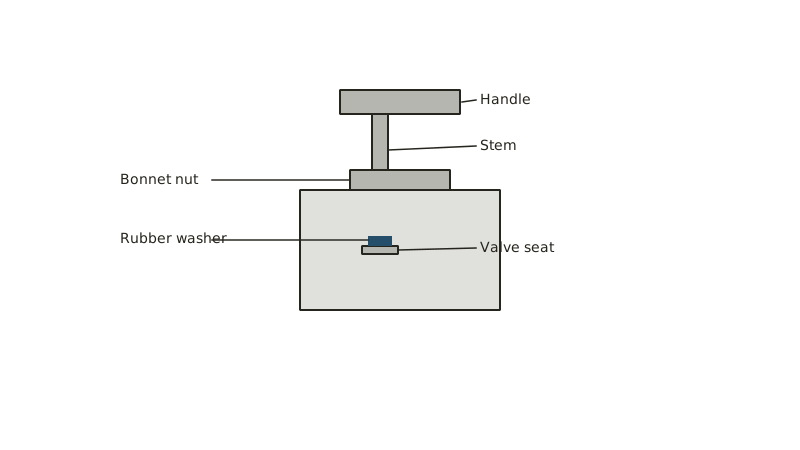
In a compression faucet, the handle drives a stem downward until a rubber washer squeezes shut against a seat. Repair means taking the handle off, backing out the bonnet nut, extracting the stem, swapping the washer and ring, greasing them and putting everything back.
Step by step:
- Lever off the decorative button on the handle, then take out the screw underneath.
- Wrap the chrome in a towel before the wrench touches the bonnet nut, so it will not scratch.
- Draw out the stem and look at the brass screw pinning the washer at its tip.
- Fit a new washer and ring, and coat both lightly with grease.
- Run a fingertip around the seat in the faucet body. If it feels rough or pitted, a new washer will wear out fast, so resurface it with a seat dresser or replace it using a seat wrench.
- Reassemble, then reopen the supply valves slowly.
A stopped drip means success. A drip that survives the new washer points to the seat, or to a stem that has worn out.
What about a two-handle faucet with cartridges?
Newer two-handle models often hide a ceramic or brass cartridge behind each handle instead of rubber washers. With the handle off, you will find a clip or nut pinning the cartridge. Free it, lift the cartridge straight out while noting which way it faces, and drop in a match facing the same way.
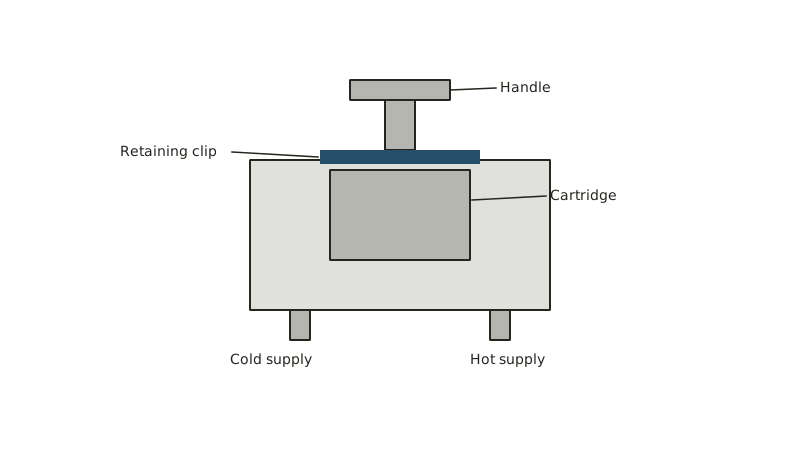
Compare both length and stem end against the old cartridge. Hot and cold versions may differ, so buy the one for the leaking side, or both if the faucet has years on it. Cartridges rarely fade gradually: once one begins to drip, it keeps dripping, and a replacement is the cure.
Bathtub fixtures often work the same way. The EPA says a shower valve dripping while idle may call for an experienced handyperson or plumber, and the tub side is covered in mending a leaky tub faucet.
Where should my own repair attempt stop?
Phone a plumber if the shutoffs will not hold, the body is cracked, the leak sits at a supply line, parts cannot be found, or the fixture is old and corroded. A broader take on the same repair is on fixing a leaky faucet, and installation prices are in what installing a faucet costs. Repairing a faucet younger than about 20 years normally beats replacing it, while an older one that keeps failing may not.
Guides list a plumber's faucet repair at about $100 to $350, shaped by the faucet type, the trip fee and parts. Outright replacement runs roughly $175 to $375 before the fixture itself. Those come from other publishers, not from us, and the true price follows a look at your faucet.
Scale explains many repeat failures. Mineral crust grinds down washers and cartridges, and hardness differs across Long Beach with the supply zone. Slowing it is the subject of our page on dealing with hard water scale.
Long Beach requires a plumbing permit to install or alter fixtures, but a routine repair, such as a new washer, is outside that. Replacing a faucet with the same style and leaving the pipes alone is simple enough; ask whether the supply lines get touched.
Common questions
How many minutes does a first attempt take?
A first-timer swapping a washer or ring should budget 30 to 60 minutes, more if the shutoffs are stuck or the seat needs resurfacing. A plumber is often done inside an hour. Cartridge swaps run about the same, as long as the right part is on hand.
What is worth asking up front, before I book?
Ask if the figure includes parts and the trip charge, and whether that charge is credited when you proceed. Learn whether the plan is repair or replacement, and why. Look up the contractor's state license number, then keep the price in writing.
Must I clear my schedule for the visit?
Mostly yes. An adult needs to answer the door, point out the sink and name the dripping side. Empty the under-sink cabinet beforehand, and put dogs and cats in another room. The job itself is short, so most of your day stays free.
Is a drip costing me on the water bill?
Yes. EPA counts a drip per second as more than three thousand gallons gone each year, and a hot-side drip also throws away the energy that heated the water. A thin steady stream costs more again. Repairing it is one of the faster ways to trim a bill.
This guide is one of many on plumber across Long Beach.
References
- US EPA WaterSense, fix a leak
- City of Long Beach, plumbing permit requirements
- Published faucet repair guides and cost guides from several home improvement and plumbing sites, checked November 2026
Updated