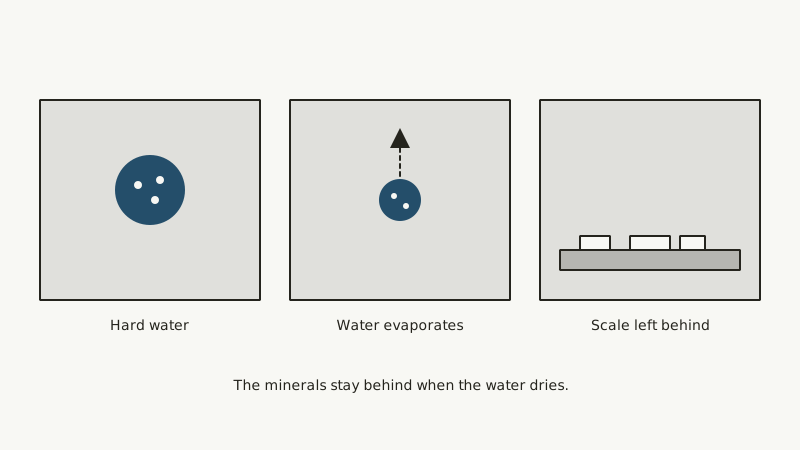
White crust on the faucet, cloudy glasses, a showerhead that sprays sideways: that is scale, and it is mostly calcium carbonate left behind when mineral-rich water dries or heats. It is cosmetic at first and expensive later, once it chokes pipe or armors a heater element. Removing it from surfaces is easy. Keeping it away is a water-treatment question, which our water softener installation page takes up in full. First, how bad is it where you live?
Is Long Beach tap water hard enough to scale up fixtures?
Hard enough to leave a crust in many homes. Long Beach Utilities' 2025 report lists two zones: one averaging about 220 ppm (12.8 grains per gallon) and a blended zone averaging about 76 ppm (4.4). On the USGS scale, 181 ppm or more counts as very hard, and 61 to 120 as moderately hard.
So the same city produces two experiences. A house in the harder zone can see scale on a showerhead within weeks, while a house in the blended zone may take months. San Pedro and Wilmington are supplied by LADWP, and other neighboring cities use their own utilities, so check your own supplier's annual report. Public references say the WHO found no convincing sign of harm to health from hardness, so think of it as a plumbing and cleaning nuisance.
What actually dissolves scale on faucets, showerheads and glass?
A mild acid. White vinegar is the usual household choice, and citric acid works too. Soak the part for an hour or so, scrub, rinse and wipe dry. A showerhead can sit in a bag of vinegar held on with a rubber band. For flat glass, soak a cloth and lay it on the crust for several minutes before wiping.
Check the finish before you soak: some coated or plated fixtures and natural stone do not tolerate acid, and the manufacturer's care page will say so. Never mix vinegar or any acid cleaner with bleach. Poison Control notes that bleach plus an acid makes chlorine gas; if you smell it, get out, ventilate and call 1-800-222-1222.
Can I clean scale out of a water heater, kettle or dishwasher?
Yes, with different tools for each. Kettles and coffeemakers take a vinegar or citric-acid cycle. Dishwashers and washers have their own cleaner products. A tank water heater collects sediment at the bottom, and the maker A. O. Smith lists draining and flushing the tank, plus checking the anode rod, as yearly maintenance, with the rod inspected at least every three years.
Flushing is a routine task you can learn from the manual: turn off the power or gas supply, close the cold feed, lead a hose from the drain spigot to a floor drain, and let it run clear. A drain spigot that refuses to open, or water that stays gritty, tells you to stop and ring a plumber. Heavy scale on an electric element can shorten its life, and a tank packed with it may be better replaced than flushed.
Can the scale inside my pipes be dissolved?
Not by anything you pour in a tap. Scale forms inside supply pipe, narrowing it, and the cure for severe cases is replacing the run. Galvanized steel is the usual victim in older homes, and it combines mineral scale with rust. A plumber can check by cutting a short section out or comparing flow at different points.
Chemical descaling services exist for some commercial systems, but they are not a casual fix for house piping and can damage old metal. If your showers weaken house-wide, read about low water pressure and, for old pipe, galvanized replacement. A repipe is a larger decision with its own page.
What keeps scale from returning?
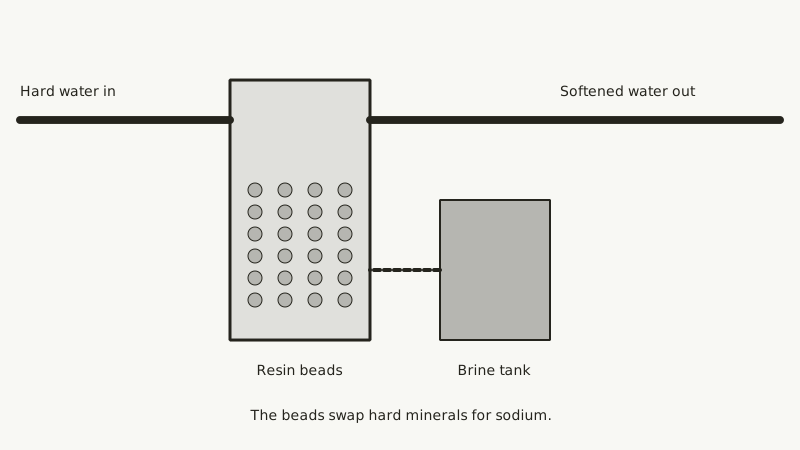
The choice is between treating the water and scrubbing forever. In an ion-exchange softener, resin beads trade calcium and magnesium for sodium, taking out the minerals that build scale; brine recharges the beads and the used water goes down the drain. Habits like wiping fixtures dry and soaking showerheads on a schedule only slow the crust.
Fitting a whole-house softener is plumbing work, and Long Beach requires a plumbing permit when treatment equipment is installed or altered. California law lets some local agencies in the South Coast region restrict salt discharge from self-regenerating softeners after a regional water board finding, so confirm there is no rule for your address before buying. Our pages on softener installation cost and whole-house installation cover the next step.
When should I stop scrubbing and call a plumber?
Call when scale has reduced pressure house-wide, when a heater is noisy or slow to produce hot water, when the drain valve on the tank is stuck, or when a fixture leaks after cleaning. Also call before installing treatment equipment, because a softener alters the pipework, needs a permit, and wants both a drain and an outlet close by.
Note which fixtures clog first, the heater's age and the hardness number on your supplier's report. The contractor should hold a California license, and the quote should list the equipment, the permit and the drain connection. The quote page is where those details go.
Common questions
Can vinegar harm my fixtures?
Brief soaks of bare brass, chrome and glass are routine. Left too long, though, it can dull some finishes, natural stone and rubber seals. Try a hidden spot, rinse thoroughly and follow the maker's care sheet. Pushing strong acid through old piping or a tank is a bad idea.
Why does my glassware go cloudy even after washing?
Mineral film from hard water often does it, and it comes off with a vinegar soak. If dishes etch permanently, the cause may be harsh detergent or a very hot cycle, not the water. A rinse aid helps with spotting, and softer water helps most of all.
Is a scale-removing "conditioner" the same as a softener?
No. Softeners pull out calcium and magnesium by ion exchange. Gadgets that claim to condition scale while leaving the minerals in place work another way, and outcomes differ, so ask any seller for independent test results first. If you want certain results, a properly sized softener is the proven route.
Will removing scale improve my water pressure?
If the clog is at a showerhead or aerator, yes, immediately. If scale has narrowed the pipes, cleaning fixtures will not help and the pipes may need replacing. A pressure gauge tells you whether it is the whole house or a single fixture.
The rest of our guides start from the plumber guide for Long Beach.
References
- Long Beach Utilities, 2025 water quality report (hardness by zone)
- Wikipedia, Hard water (USGS hardness classes)
- Wikipedia, Limescale
- Poison Control, chlorine gas facts (mixing cleaners)
- A. O. Smith, troubleshooting and maintenance guide
- California Water Code 13148, local control of residential self-regenerating softeners
Updated