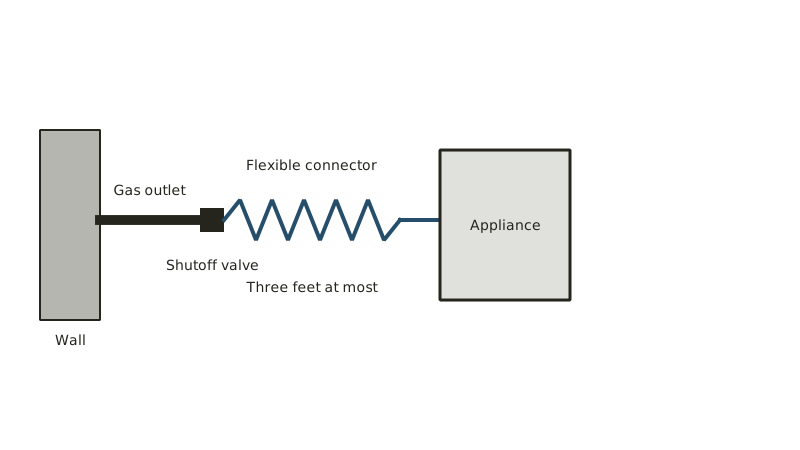
Picture the bendable corrugated hose behind a range or dryer: that is the flexible connector, and the half-inch size is the common one for such appliances. It is a short jumper from a rigid outlet, not a way to carry gas across a room. Long Beach's plumbing code caps a gas flex connector at three feet, and anything longer is piping that needs a permit. Complete jobs are described on the gas line plumbing page.
What job is a half-inch flex connector permitted to do?
It connects an appliance to a rigid gas outlet, and nothing more. Long Beach limits a flexible gas connector to three feet in length and requires an approved, accessible shutoff valve at the outlet, immediately ahead of the connector. It is the last link in the chain, so it must be short, visible and valved.
Keep that in mind before buying a longer one. The state's rule for mobile home park connectors allows six feet, yet the city code that applies to houses in Long Beach says three. The shorter local limit governs here, so ask Building and Safety if your appliance sits more than three feet from the outlet.
Model plumbing codes also bar hiding a connector inside a wall or passing it through one, and the sources I could read did not show the city's own wording, so confirm that with the city as well. In practice, if the gas has to travel farther than the connector reaches, the extension is rigid pipe or approved tubing run by a contractor, ending in a new valve and outlet.
Will a half-inch line carry enough gas for my appliance?
Often yes for a single range or dryer, but sizing is not a guess. The City says pipe size depends on the distance from the meter to the farthest outlet and the gas demand of the appliances served. A connector that is too small starves the appliance, and one oversized for the outlet does no good.
Appliance labels state demand in BTU per hour. A plumber adds up what every appliance on the run draws and checks each segment back to the meter. No source I trust offers a one-size chart for half-inch connectors, so I will not print one. Adding an appliance to a line already in use calls for a capacity check first, most of all for a fire pit, barbecue or tankless heater, which draw heavily.
If a meter has to be relocated or upsized, the City says to contact its Utilities Department, since the plumber alone cannot do it.
What are gas lines in a house made of?
Indoors, black steel pipe and corrugated stainless steel tubing are the usual choices, the tubing being a heavier relative of the flexible connector. Outdoors, the City approves polyethylene only for exterior underground work, with a tracer wire of at least AWG 14 or tape that reaches above grade at both ends.
The city page I read does not list the approved indoor materials, so confirm what Building and Safety accepts before you buy pipe. The City also says polyethylene is not approved for indoor use or for encasement in concrete.
Ferrous underground pipe needs factory coatings, since the code says protective coatings shall be machine applied. Unions are allowed only at exposed appliance connections and at exposed exterior locations immediately on the outlet side of the building shutoff valve.
Wider code questions are handled in residential gas piping codes.
How must outdoor and buried gas piping be installed?
Long Beach requires underground gas pipe to have a machine-applied coating or wrap against corrosion, with at least 12 inches of earth over horizontal metallic pipe. Exposed pipe must stay at least six inches above grade, and no gas pipe may be placed in or on the ground under a building. Call for inspection before the trench is covered.
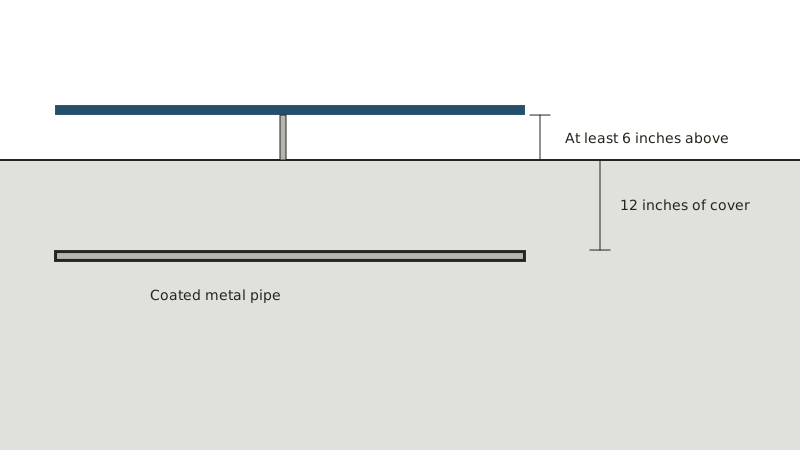
Details that catch people out:
- Exposed fittings and damaged coating need listed primer and spiral-wrapped listed tape, a minimum of 10-mil tape stretched to a 40-mil total thickness.
- Gas pipe may not be buried, or cast into a slab, beneath a raised floor. It can be fastened to raised wood joists provided it stays at least six inches above grade.
- Before digging for any line, locate what is already buried. A strike on an existing gas or sewer line is an emergency.
A barbecue or fire pit stub, a pool heater and a detached garage all count as exterior runs. Residential depth is the 12-inch figure above for metallic pipe, according to the City, and polyethylene follows its own listing and tracer wire rules, so ask before trenching.
How is a gas connection made at a mobile home?
California's Title 25 regulation for unit gas connectors, section 2354, requires an approved flexible gas connector, listed for its intended use, no more than six feet in length. It must be sized for the unit's appliance demand, and each unit may have only one gas supply connection.
That rule is for homes in special occupancy parks, the legal term for mobile home parks. A mobile home on a private lot or a lot in a park with its own utility arrangements may involve different permit offices, so ask the park or the building department which applies before work starts. Related checks are covered under mobile home plumbing inspection and plumbing under a mobile home.
Whatever the setting, treat the connector as a safety part. Do not reuse a damaged one, do not stretch it, and do not join two flexible connectors to reach farther.
What paperwork and testing come with new gas piping?
New gas pipe longer than six feet needs a Long Beach plumbing permit; a run of six feet or less from an approved outlet to an appliance in that room is exempt. The finished piping is pressure tested with air at 10 psi, held at least 15 minutes without added air, while an inspector watches. Water never goes into a gas system.
During the test the shutoff valves are removed or the outlets capped, since valves will not hold the test pressure, and leaks are found with soapy water. Defective pipe or fittings must be replaced, not repaired. After approval, the City's utility provides service.
My advice, whatever the dollar threshold the state sets for licensing, is to hire out gas piping at any price and to check the contractor's number on the board's website before any work. Pricing sits on the gas line cost page, and gas piping work describes the process. Earthquake valves follow separate rules, explained in earthquake gas shutoff valves.
A gas odor means everyone out, no switches, no flames, and the call placed from outside. Long Beach Energy Resources handles Long Beach and Signal Hill, (562) 570-2140; neighboring cities are on SoCalGas, 1-800-427-2200. Where people are at risk, call 911 right away. Never attempt to repair a leak yourself. A written price for gas work can be requested on the quote form.
Common questions
What is the maximum flex connector length in Long Beach?
Three feet, according to the City's plumbing code requirements, with an accessible shutoff valve right ahead of it. Longer runs need rigid pipe or approved tubing installed by a contractor under a permit. The state allows six feet for mobile home park connectors, which is a separate rule.
Is it acceptable to pass a flex connector through a wall?
Connectors are meant to run in the open between an outlet and an appliance. Model codes bar concealing them in walls, and the city page I read did not give its own wording, so ask Building and Safety. If the gas has to cross a wall, a plumber should run rigid pipe or approved tubing with a valve at the new outlet.
What burial depth applies to a residential gas line?
Long Beach requires at least 12 inches of earth cover over horizontal metallic gas pipe, with a machine-applied coating or wrap, and an inspection before the trench is covered. Exposed pipe must stay six inches above grade. Polyethylene has separate rules, including a tracer wire. Check with the city before digging.
May I hook up a gas appliance on my own?
Swapping an appliance onto an outlet that already exists, using an approved connector and valve, is where most owners should stop. New piping beyond six feet needs a permit and a pressure test. Check joints with soapy water, never a flame, and phone the utility at any gas odor. When unsure, hire a plumber.
The rest of our guides start from Long Beach plumber.
References
- City of Long Beach, mechanical, electrical and plumbing code requirements (gas piping)
- City of Long Beach, permit questions
- California Code of Regulations, Title 25, section 2354, unit gas connector
- Long Beach Utilities, gas
- SoCalGas, natural gas leaks
- California Contractors State License Board, hiring a contractor
Updated