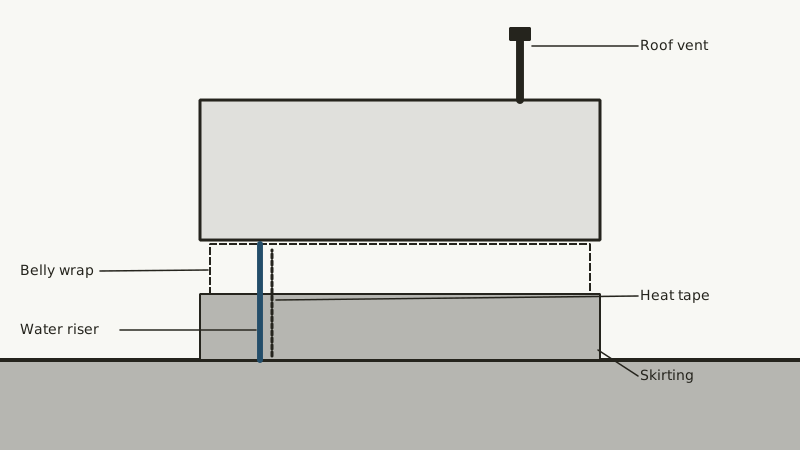
Most of the pipes in a manufactured home hang below the floor in a thin envelope of belly wrap, which is exactly where cold air gets them first. Long Beach rarely drops that low, so winterizing here means two narrow jobs: a quick routine for the odd cold night, and a full shutdown when nobody will be home for a stretch. Both are below, with the pipe and vent basics that make them make sense. Other plumbing help from us starts on the Harbor Lights front page, and the harbor-area service areas we cover are listed there too. Get ready before the first cold night, because every step below is easier with the water still running.
Does a mobile home in Long Beach need winterizing at all?
Seldom for ordinary weeks, since hard freezes at the coast are uncommon, but the exposed parts of a mobile home lose heat faster than a house does. A cold snap, a vacant unit, or a home further inland can still put pipes at risk. Treat winterizing as a small insurance step, not a yearly ordeal, and read burst pipe prevention for the wider checklist.
The weak spot is the riser, the stretch of water line that climbs from the ground into the floor, and any pipe that hangs below the belly wrap. Torn wrap, loose skirting or a missing spigot cover are the gaps worth closing in November. Insurers also care: policies commonly expect the home to be heated or the water shut off when vacant, so a drained house protects your claim as well as the pipes.
What should I do on the night a freeze is forecast?
Run through five things: disconnect hoses and cover the spigot, make sure belly wrap and skirting are intact, check any heat tape is plugged in and working, keep the thermostat no lower than 55°F, and locate the main shutoff valve. One industry guide adds a slow faucet trickle through the coldest hours.
Fit matters on heat tape. Older, thin supply lines from before PEX may not tolerate it, so ask a plumber before wrapping unfamiliar pipe. Cabinet doors under sinks on outside walls can be left open so house air reaches those lines. Do not use a flame or a hair dryer on a frozen pipe beside plastic; if one stops flowing, call for help rather than guessing.
How do I shut down a vacant mobile home for the winter?
Close the main water supply, open every faucet to relieve pressure, drain the supply lines and low-point drains under the home, flush each toilet, and drain the water heater. Switch the heater off first: an electric element or gas burner running with an empty tank is damaged quickly. Put non-toxic plumbing antifreeze in the drain traps.
If the home uses a well, the pump and pressure tank need draining too. If RV antifreeze goes into the supply lines, the water heater needs a bypass kit, otherwise the tank swallows gallons of it. Gas is a separate matter: a gas appliance is closed down at its own control, and anything that involves cutting or reconnecting gas pipe belongs to a contractor.
How is mobile home plumbing laid out?
Water arrives at one inlet near the ground, often with a regulator and shutoff, then travels through the floor structure to the kitchen, the bathrooms and the water heater. Drains slope to one or two outlets and meet the park's sewer connection under the home. Vents let the drains breathe, either through the roof or with air admittance valves under fixtures.
A true schematic for your home lives in its own paperwork from the manufacturer, since layouts differ by model and year, so do not trust a generic diagram before cutting anything. Homes of the 1978 to 1995 era may carry gray polybutylene supply lines, a reason to have them examined. Our guide to putting plumbing under a mobile home shows the underside in more detail.
Why do the roof vents matter, and how can I inspect them?
A roof vent feeds air into the drain pipes, which keeps wastewater moving and stops traps from being sucked dry. Gurgling drains, slow fixtures and sewer smells often point to a blocked or missing vent. Look for leaves, nests or a damaged cap standing on the ground or a ladder, never by walking across the roof.
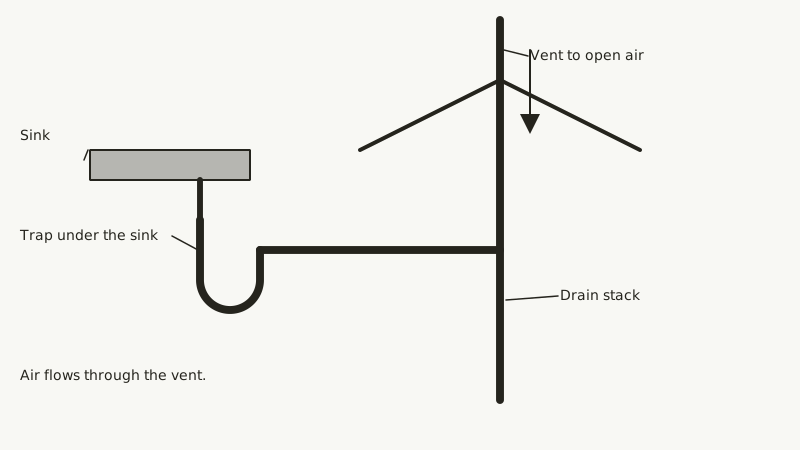
Many manufactured homes use air admittance valves instead of several roof stacks, so a smell may come from one of those valves under a sink rather than the roof. Unsure which kind you own? One plumber visit settles it. Seal around furnace and water heater vent caps before winter, and clear debris from any vent pipe.
What are the duties of a maintenance plumber on a manufactured home?
This kind of plumber works on prevention: finding the weak joint before it lets go. That means checking the supply lines and fittings under the home, testing the pressure regulator and shutoff, flushing the water heater, inspecting drain traps and vents, and repairing wrap and skirting damage that exposes pipe. You come away with a written rundown of what is sound and what is tired.
Hold on to that rundown; it sorts the jobs due before cold weather from those that can wait. By the EPA's count a household leaks more than 9,300 gallons a year, which makes a drip under a mobile home belly is a good place for that to happen unnoticed. Want one scheduled? Fill in the quote page.
How often should the water pipes in a house or mobile home be replaced?
There is no set age. Copper and PEX can last decades, while galvanized steel and polybutylene fail sooner, and the age of the home is only a clue. Replace when leaks keep appearing in different spots, when the tap water turns brown, or pressure keeps sliding, not on a calendar.
Before any replacement in a mobile home, check who has permit authority. California's Housing and Community Development department states that it has sole authority to issue permits and inspect alterations to mobilehomes, not the city, and its guidelines define what counts as an alteration. Ask them, and the park management, before work starts. Routine repair may be outside that category, but the rule on which is which is theirs to give.
Common questions
How long does winterizing take?
A cold-night routine takes under an hour for most homes. A full shutdown with draining, antifreeze in the traps and a heater drain takes a few hours, longer if the home has many fixtures or a well. An underbelly inspection beforehand adds a little time, and it is where problems turn up.
Which questions should come before a winterizing appointment?
Ask whether the plumber works on manufactured homes, what the visit covers, whether heat tape or insulation is included, and who handles any permit question. Request the contractor license number in writing. Find out how a worn line gets handled: repaired, replaced, or just reported to you.
Is it safe to use heat tape on mobile home pipes?
Often yes, when it is the right type for the pipe material and is plugged in correctly, but not always. Thin, older lines may not tolerate it, and damaged tape is a fire concern. Check the manufacturer's instructions, inspect the tape each fall, and do not wrap over frayed cord. If in doubt, ask before you plug it in.
Should I do the work myself?
Draining lines, covering spigots and tidying skirting are reasonable do-it-yourself tasks. Gas piping, replacing supply lines, and anything that counts as an alteration belong with a contractor and the right permit. Once a line has split (our page on spotting a burst helps), close the water and phone for help; patches inside a belly are easy to get wrong.
References
- Insurance Institute for Business and Home Safety, winter weather ready guide
- NAIC, will my homeowners policy cover water damage from a burst pipe
- California Department of Housing and Community Development, manufactured and mobilehome permit guidance (HCD MH 604, IB 2024-04)
- U.S. EPA, Fix a Leak Week
- Published manufactured-home winterizing guides, checked November 2026
Updated