What is the best sealant for a leaking water pipe?
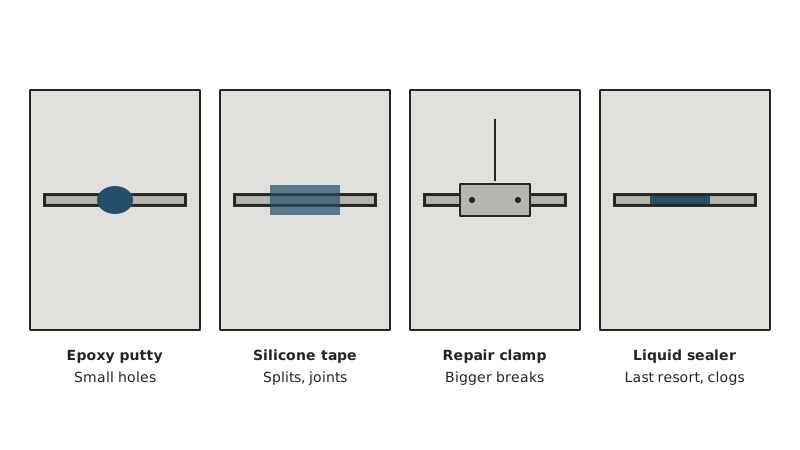
There is no single best product. Epoxy putty plugs small holes on dry copper or steel, self-fusing silicone tape wraps a split or weeping joint, and a repair clamp with a rubber liner holds a bigger crack. The liquid sealers you pour into the pipe are the least predictable. Fit the product to the pipe, pressure and leak, and see every one as temporary. Wider leak help is on the plumber for leaks page.
That ranking holds for most homes. A pinhole in copper, a weeping union and a split PVC elbow each want something different, and a wrong pick fails in days. Before you buy anything, shut off the supply, because nearly every sealant cures properly only on a dry, clean surface. If you are looking at the bigger picture of finding and fixing leaks, the plumber for leaks page lays out the options.
How do the main types of leak sealant compare?
Each type has a job and a limit. Epoxy putty is for small holes, tape is for splits and joints, clamps handle bigger breaks on straight pipe, and liquid in-pipe sealers are a last resort that can clog. None replaces cutting out damaged pipe. The table shows the trade-offs.
| Type | Best for | Limits |
|---|---|---|
| Epoxy putty or stick | Pinholes, small cracks on dry copper, steel, PVC | Needs dry, clean, cured surface; poor on moving or threaded joints |
| Self-fusing silicone tape | Weeping joints, small splits, hose-size pipes | Temporary, needs tight wrapping, can slip under high pressure |
| Rubber and clamp repair sleeve | Splits and pinholes on straight pipe | Needs access around the pipe; fails on corners and fittings |
| Fiberglass or resin wrap | Larger repairs on straight runs | Messy, needs cure time, not a joint fix |
| In-pipe liquid sealer | Not recommended as a first choice | Can clog valves, fixtures and aerators; unpredictable |
| Compression or push-fit coupling | A cut-out repair, a lasting fix | Needs pipe cut and fitted properly |
For drinking water lines, choose products rated for contact with potable water, which in the US means listed to NSF/ANSI 61. The label should say so. A paint-on or putty product that is not rated for potable water does not belong on a drinking supply.
How should a sealant be applied?
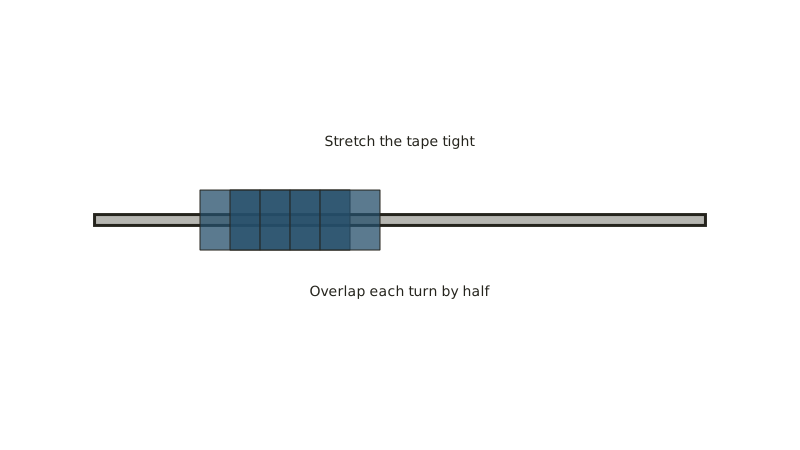
Close the supply, let a tap drain the pipe, dry the spot and scrub the surface with a rag and fine abrasive. Press putty on, or wrap tape tightly with each turn overlapping the last by half, then wait until the cure time on the label has fully passed. Restore pressure gradually and look the patch over later that day and again tomorrow.
In steps:
- Shut the closest valve, or the main, and empty the line.
- Dry the pipe fully. A hair dryer helps. Moisture is the main reason repairs fail.
- Roughen smooth plastic or metal lightly so the product grips, then wipe it clean.
- Apply putty in a thick ring that extends an inch past the hole each way, or wrap tape from one side of the damage to the other with tension.
- Wait for the cure time, not just the touch-dry time.
- Restore water gradually and look for beads, then check again after a few hours.
If a drip returns within a day, the pipe wall or joint is the issue, not the product. Ease off tightening and plan a proper repair. The water pipe leak page has a temporary rubber-clamp method for plastic.
When does a sealant not work?
Expect failure on pipe that is wet, rusted through, under very high pressure, shifting or hot, and on threaded joints, fittings and elbows. A long split, flaking rust or several leaks means the pipe is past patching. Never use sealant on a gas line, and do not count on it for a main supply or a sewer drain.
Some conditions to watch for:
- Pressure. Pressure above the code limit stresses every repair. The state code treats 80 psi of static pressure as the trigger for a regulator.
- Corrosion. Pinholes in copper at several spots usually signal a pipe failing from within. See copper pipe pinhole leaks.
- Age. Older galvanized steel, common in 1920s to 1950s Long Beach homes, rusts from the inside, so a patch on the outside rarely lasts. Look at galvanized pipe replacement.
- Joint leaks. A weeping plastic joint is better cut out and re-glued. See fixing a leaking PVC pipe joint.
- Hot lines. Many tapes and putties are not rated for hot water.
Can a liquid sealant fix a leak inside the pipe?
Poured-in sealers claim to find and plug leaks from inside, but results are unpredictable, and they can clog valves, aerators and appliances. They may also leave plumbers with a harder repair later, and some are not rated for drinking water. For a leak you can see, a patch or a cut-out is the better route.
If a product is not listed as safe for potable water, do not put it in a line that feeds the kitchen tap. Check with a plumber before putting an in-pipe product into a house supply. A line with several leaks usually needs replacing, so a repipe quote is worth collecting. Repiping a house covers the process.
At what point should a plumber replace the DIY patch?
Bring one in for leaks inside walls, ceilings or slabs, a leak that returns after patching, pipe corroded in many places, or any gas or sewer line. Also call for a supply-side leak in an older house with galvanized pipe, or when water is already damaging finished surfaces.
The plumber can cut away the bad stretch and splice in a coupling or fresh section, trace where the water enters, and read the pressure. Detection gear finds hidden leaks without opening walls; see leak detection cost.
Begin with the quote form. Requests are handled Monday to Friday during office hours, 9am to 5pm, a plumber is arranged to visit, and the figure is put in writing beforehand. Contractor work from $1,000 up must be done under a California license, so request the number. The Harbor Lights home page explains how this works.
If a pipe is spraying or flooding, close the main first. Even a small drip adds up: EPA says leaks cost the typical home over 9,300 gallons annually.
Common questions
Does epoxy putty stop a water pipe leak?
It can seal a pinhole or small crack on dry pipe and hardens within minutes. Think of it as a temporary patch, since it does poorly on threaded or moving joints. Shut the water off, dry and clean the pipe and follow the cure time on the label.
Will leak tape hold on a pressurized pipe?
Self-fusing silicone tape may hold a small leak under pressure for a while if wrapped tight, but it can slip as pressure climbs. White PTFE thread tape is another product that only seals threads. Close the water first for the best result, and plan a proper repair.
Can a sealant go on a drinking water pipe?
Only one rated for potable water, which in the US means a listing to NSF/ANSI 61 on the label. Many hardware-store compounds are not. If you cannot find the rating, assume it is not safe for a drinking supply and use a clamp or coupling instead.
How long does a pipe leak sealant last?
From hours to a couple of weeks for most patches, depending on pressure, moisture and the pipe. Treat any sealant as a bridge to a proper repair. If it holds for a long time, the underlying pipe is still aging and may leak elsewhere.
Can I seal a leaking pipe behind a wall?
Not reliably. You cannot see or dry the pipe, and a sealant cannot cure on wet metal. Close the supply to that line and call a plumber, who can detect the leak, open a small access hole and repair the section properly.
References
Updated