A bathroom remodel in Long Beach goes smoothly when the plumbing decisions come before the tile order. Settle where each fixture sits, confirm whether the drain or supply lines have to move, and line up the permit while the room is still a mess. What follows tracks a typical remodel from first measurement to last faucet, and the Harbor Lights Plumbing home page shows our other services.
What does the plumber do at each stage of a bathroom remodel?
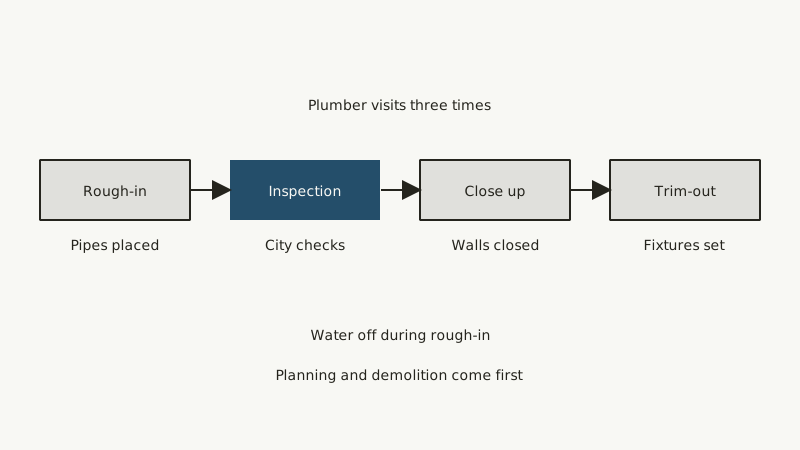
A plumber works in three visits. First comes the rough-in, once the room is stripped to studs, when drains, vents and supply lines are placed. Then the inspection, before any wall is closed. Last comes the finish, once tile and cabinets are done, when the toilet, shower trim, faucet and shutoffs are set and tested.
Walking through it:
- Planning. Measure, choose fixtures, and decide whether anything moves.
- Demolition. The water goes off at the main or at the bathroom stops. The old fixtures come out.
- Rough-in. New drain, vent and supply runs go in. Water lines are pressure-tested.
- Inspection. A city inspector looks at the exposed work before it gets covered.
- Close up. Cement board, waterproofing, tile and cabinetry follow.
- Trim-out. The plumber returns to set fixtures and check for leaks.
Water is typically off during demolition and rough-in, so plan where the household showers. A remodel can leave a house without that bathroom for several weeks, and a second bathroom makes life easier.
Is a city permit part of a bathroom plumbing job here?
Yes, when the plumbing changes. The City of Long Beach requires a plumbing permit before piping or fixtures are installed or altered, and the work must be inspected before it is covered. Finish work such as tile, cabinets, counters and painting does not need one. Contractors or owner-builders living in the home may apply.
The city also says a permit applies whenever a fixture is installed, altered or replaced, which surprises many owners with a simple toilet swap. If you plan to do part of the job yourself, call Building and Safety at 562-570-7648 and ask what applies to your scope. An owner-builder must live in the home, do the work personally and sign a statement about workers' compensation.
When you hire out, verify the contractor on the CSLB license lookup, insist on a written contract once a job passes $500, and treat the lesser of $1,000 or ten percent as the ceiling on any deposit.
What does it cost to relocate a toilet, tub or shower drain?
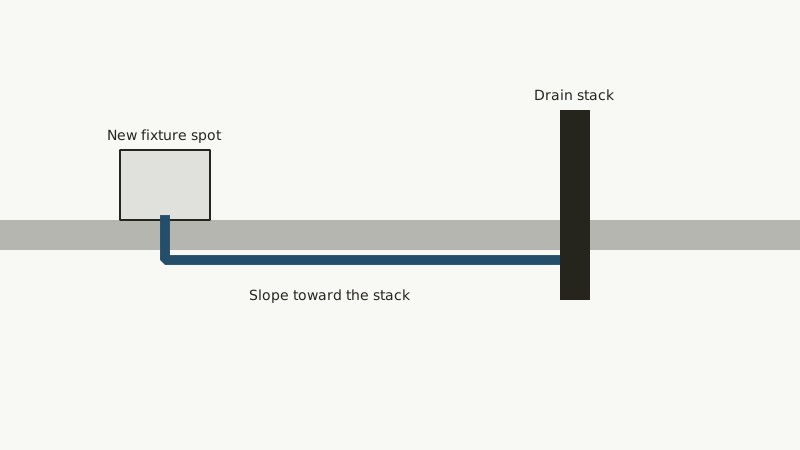
Guides price plumbing labor for fixtures that stay put at about $1,000 up to $3,000, because the existing lines get reused. Moving a toilet or shower typically adds about $1,000 to $5,000 over a wood floor, and $3,000 or more on a concrete slab, where cutting and re-pouring come into play.
What the numbers depend on:
- Foundation. Many 1920s to 1950s houses in Belmont Shore, Bixby Knolls and Naples sit on raised foundations with crawl space access, which makes moves cheaper. Slab homes cost more.
- Distance. A toilet shifted a couple of feet is modest. Across the room, drain slope and venting get involved.
- Pipe condition. Old galvanized or cast iron may be replaced while the wall is open. Details sit in the galvanized replacement guide.
- Fixture count. A double vanity doubles the supply and drain work.
The cheapest remodel keeps every fixture where it is. If a new layout matters more than the budget, make the call with the plumber's written estimate in hand, not before.
Which fixtures and flow rates does California require?
State rules cap flow on new fixtures. A flush may use at most 1.28 gallons, a showerhead delivers up to 1.8 gallons every minute, and a bathroom faucet around 1.2. These are the state's standard efficiency limits, so most fixtures sold here already comply. Ask the plumber to confirm your choices before you buy specialty or imported fixtures.
A few practical points follow from that:
- Multi-head showers share one flow limit across all heads on a single valve, so a body-spray setup may feel weaker than expected.
- Shutoff valves. Each fixture should get its own stop, so a future repair does not require shutting off the house. Rusted old stops are easy to replace now.
- Hose bibs and laundry faucets need a non-removable backflow device, which the city lists in its code notes.
- Hot water. A larger tub or rain showerhead may overtax the heater. If your heater is a gas model, check its capacity before choosing. See the tank versus tankless comparison if an upgrade is on the table.
How do you get the room ready, and what should you ask before work starts?
Clear the space, protect floors on the route in, and decide where the household will wash during the job. Then request a scope on paper listing fixtures, pipe replacement, the permit, who books the inspector, and anything left out. A scope that is vague on these points tends to become change orders.
Questions worth asking:
- Does the price include rough-in and trim-out, and are they separate visits?
- Who orders and who supplies the fixtures?
- Are new shutoff valves and supply lines included?
- Who applies for the permit, and who meets the inspector?
- What access panel is left behind so future maintenance does not mean breaking tile?
A removable panel behind the tub or shower valve costs little and spares a wall later. Consider it at the planning stage.
To get quotes for the plumbing part, use our quote form, and check the broader plumber cost overview to see how remodel numbers compare with ordinary repairs. When the new bathroom is finished, the faucet and disposal cost page helps price the small stuff. Should a leak appear after hours, close the supply valve at the fixture and phone during our weekday office hours.
Common questions
When should I hire the plumber in a bathroom remodel?
Before demolition if you can. The plumber helps decide whether fixtures can stay, flags pipe problems behind the wall, and fixes the schedule for rough-in and inspection. Hiring after the walls are open often means paying for surprises under pressure, and the tile crew ends up waiting.
Does moving a shower or toilet need a permit?
Yes. Changing drain, vent or supply piping calls for a City of Long Beach plumbing permit, with an inspection before the wall is covered. Swapping tile or a vanity cabinet does not. The plumber or an owner-builder who lives in the home may pull the permit.
Can I keep my old galvanized or cast iron pipes?
Sometimes, though a wall that is already open is the least expensive time to replace them. Corroded galvanized lines choke flow and cast iron drains crack with age. The plumber can test and look with a camera, then tell you which sections are worth replacing while the wall is open.
How long will the bathroom be out of use?
Published remodel guides commonly describe several weeks for a full gut job, with plumbing visits at the start, after demolition and at the end. Taps stay dry during the work itself. A smaller in-place fixture swap may wrap up within a day or two.
References
- City of Long Beach, permit questions
- City of Long Beach, mechanical, electrical and plumbing code requirements
- California Contractors State License Board, home improvement contracts
- Published bathroom plumbing and fixture relocation cost guides from several consumer cost sites, checked November 2026
Updated